




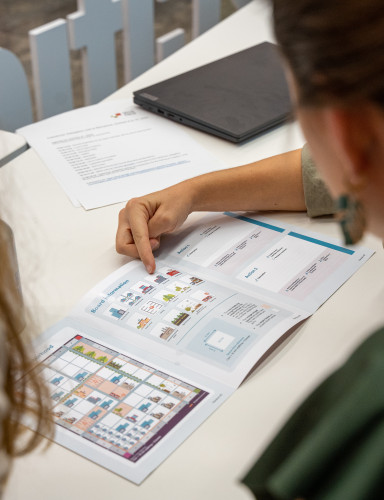
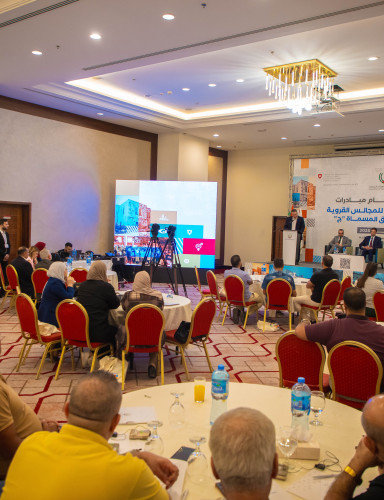


In the context of its 2025 Cultural Heritage Preservation Training Program, the Association of Palestinian Local Authorities (APLA) held an online training session via Zoom on Protection and Emergency Plans for Heritage Preservation. Delivered in collaboration with Sites & Cités remarquables de France (French National Association of Remarkable Sites and Cities), the session aimed to empower and enhance the capacity of local government units (LGUs) to protect and manage cultural heritage. To this avail, LGUs would understand relevant legal and regulatory frameworks, put in place emergency response strategies, preserve heritage buildings and sites, and integrate sustainability concepts into local planning. In addition to staff from engineering, cultural heritage, and public relations departments at 12 LGUs, participants included members of the field and office teams of the Historic Buildings Documentation Project, implemented by APLA in partnership with the UNESCO and Ministry of Tourism and Antiquities (MoTA), in the Hebron governorate.
Firas Aqel, Acting Director General of the MoTA National Register and Heritage Preservation, presented the Ministry’s current directions, legal framework governing protection plans, and role of LGUs in heritage preservation. Aqel also provided an overview of the National Historic Buildings Documentation Project, which was launched in the Hebron governorate.
Marie Courselaud, President of Blue Shield France (BSF), presented the organization’s role in protection planning and heritage management in post-disaster situations. Courselaud outlined BSF’s internal and external training efforts, information sharing mechanisms, and collaborations with various institutions and LGUs. She also highlighted key post-disaster interventions in the context of archiving and presented the Arabic version of the protection manual developed by BSF.
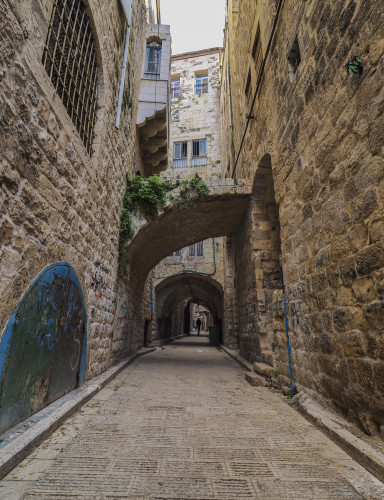
Eng. Murad al-Tamimi, Tourism and Heritage Head of Section at the Hebron Municipality, shared the Protection Plan for the Old City of Hebron. The presentation covered the history and global significance of the old city, as well as the general principles of the protection plan, including priorities, sustainability, public spaces, and uses. Besides emergency procedures and institutional role distribution, Al-Tamimi presented on the management, areas of action, reference studies, and executive summary of the protection plan.
In a related context, Eng. Dima Mashaqi, Director of the Buildings and Cultural Heritage Department at the Ramallah Municipality, outlined the municipality’s role in protection planning. She elaborated on the pressures of rapid urbanization, economic and social crises and their impact on heritage, and sustainability concepts in relation to the economy, society, and infrastructure. Mashaqi highlighted relevant recommendations, such as integrating heritage into planning and involving local communities. She also shared an overview of some historic buildings and heritage sites that were demolished during the war on Gaza.
This training is part of APLA’s ongoing efforts to enable Palestinian LGUs to implement protection and emergency plans in heritage preservation. It also seeks to provide capacity building to LGU staff and project teams to apply international expertise and best practices in heritage protection. These efforts aim to safeguard national memory and strengthen the cultural identity of future generations by developing sustainable protection strategies and precise documentation processes.
