
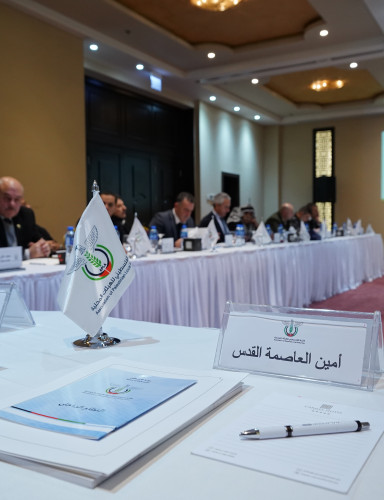
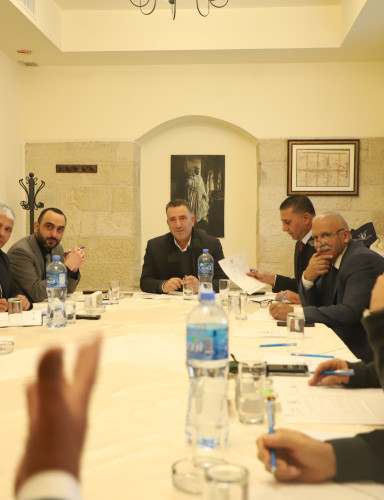


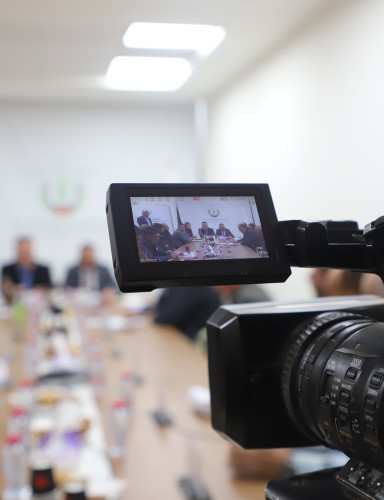

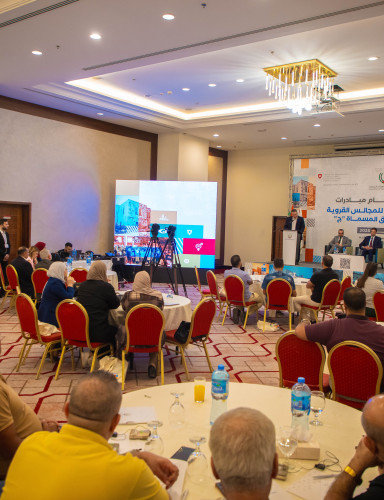


The International Partnerships and Decentralized Cooperation Taskforce of the Association of Palestinian Local Authorities (APLA) concluded a three-day specialized workshop with the participation of 15 representatives from 13 local government units (LGUs) across various governorates. The workshop represented one of the most comprehensive organizational milestones and participatory experiences to date, paving the way for a roadmap on municipal twinning and decentralized cooperation. The process set the groundwork for an ambitious institutional track that redefines the role of Palestinian LGUs within the international cooperation landscape and equips them with practical, methodical tools to advance confidently in this vital field.
APLA’s Communication and Advocacy Officer, Nadine Nakhleh, emphasized that the workshop marked a pivotal starting point for developing the first practical guide on international municipal partnerships, built directly on local experience and co-created with the LGUs themselves. She clarified that this guide is not merely a theoretical product but will be integrated with an executive action plan to be implemented by APLA and its International Partnerships Taskforce, establishing a realistic and applicable model that combines ambition with practicality, and provides municipalities with clear tools to act with confidence on the international stage.
The first day was devoted to conceptual framing, featuring presentations of real local experiences that enriched the discussions. Abd al-Afo Al-Aker, Director of International Relations at Nablus Municipality, delivered a comprehensive review of models of city diplomacy and international partnerships in Palestine and their historical contexts. Carmen Ghattas, Head of Public Relations at Bethlehem Municipality, shared the municipality’s experience in institutionalizing partnerships and documenting them through a clear implementation plan. Youssef Qumsieh, Economic Development Specialist at Beit Sahour Municipality, presented a successful hands-on case that demonstrated the tangible impact of partnerships, while Amani Abu Zayyad, Director of Planning and Projects at Al-Eizariya Municipality, provided a critical reading of the challenges that hindered the effectiveness of some partnerships.
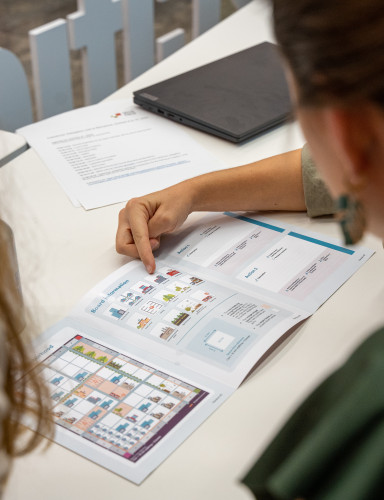
The second day was fully dedicated to practical group work. Participants moved from discussion to building the concrete components of the guide. The groups developed integrated models including: a draft partnership protocol, twinning agreements, a template for municipal profiles, and an action plan for activating partnerships. In addition, they designed a readiness self-assessment form—APLA’s first tool of its kind for LGUs seeking international partnerships—alongside core contact lists and a preliminary draft of a municipal international relations policy.
On the third day, the team advanced to the stage of organizational consolidation, drafting and adopting a comprehensive annual action plan structured around three main pillars. The first pillar, training and dissemination, focuses on transferring the experience to other municipalities through in-person and virtual trainings built on the guide’s tools and applied content. The second pillar, national activities and internal networking, seeks to strengthen coordination among municipalities and to establish more effective channels with official and diplomatic stakeholders. The third pillar, international diplomacy and expansion, opens new horizons for broader engagement of Palestinian municipalities in global cooperation spaces, expanding partnerships beyond traditional frameworks.
This workshop is part of APLA’s International Partnerships and Twinning Program, a central pillar of its 2023–2027 Strategic Plan, which embodies APLA’s commitment to Sustainable Development Goal 17: “Partnerships for the Goals.” The workshop was implemented with the support of the Local Governance Reform Program (LGRP-III) managed by GIZ.


