
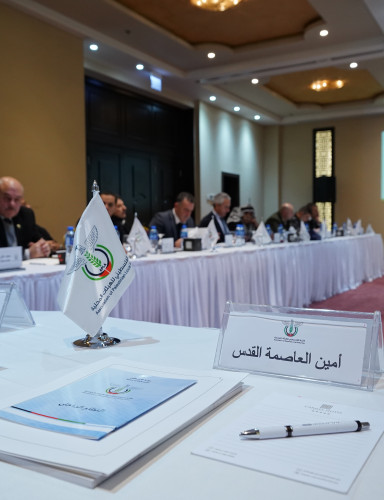

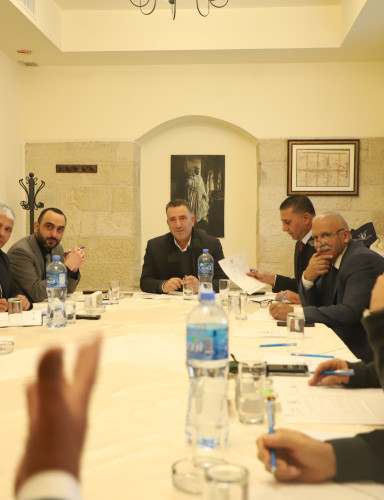




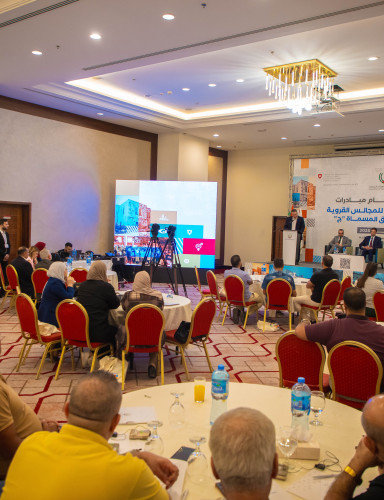



The Association of Palestinian of Local Authorities (APLA) organized a specialized training on Architectural Assessment and Photography, targeting 24 field data collectors in survey teams of the Historic Buildings Documentation project. The training aimed to refine participants’ skills in evaluating and documenting the architectural, historical, and social value of buildings using advanced professional methods, digital tools, and high-quality photography techniques.
This training is a core component of the project plan, which involves forming field teams equipped to use approved survey forms and GIS applications. These teams collect geographic data on buildings located in the central cluster of Hebron governorate, specifically in Taffuh, Beit Kahil, Halhul, and Hebron city. The ultimate goal is to establish an accurate database that will serve as a strategic reference for strengthening efforts to preserve Palestinian architectural heritage and ensure its continuity for future generations.
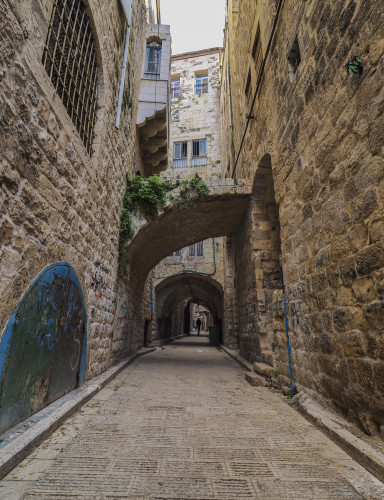
The training was delivered by architect Murad al-Tamimi from Hebron Municipality, who also monitors implementation of the project. Al-Tamimi presented methodologies for architectural assessment of elements of value and techniques for identifying different architectural styles within the target area, referencing key historical periods in Palestine and highlighting prominent features of the Mamluk and Ottoman architectural styles. The session also covered the fundamentals of architectural documentary photography, including selecting target elements, emphasizing architectural details, and applying ideal photography standards to document facades, streets, and the overall spatial context.
In a related context, field teams presented their experiences from the first week of documentation assignments, providing an early evaluation milestone to assess how aligned field methods are with the project’s strategic objectives. The teams discussed challenges related to accessing target sites, documenting architectural details in complex environments, and ensuring the accuracy of collected data. These efforts were designed to improv the effectiveness of fieldwork.
The Historic Buildings Documentation project reflects APLA’s commitment to safeguarding Palestinian architectural heritage as a cornerstone of national identity and a leverage of community resilience. The project is implemented in partnership with the UNESCO Office in Ramallah and Ministry of Tourism and Antiquities, with support from the UNESCO Heritage Emergency Fund. It aims to establish a comprehensive national database that serves as a key point of reference for protecting this legacy, ensuring it is preserved and transmitted to future generations.

