
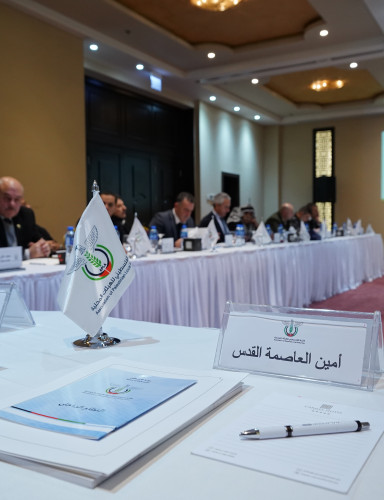



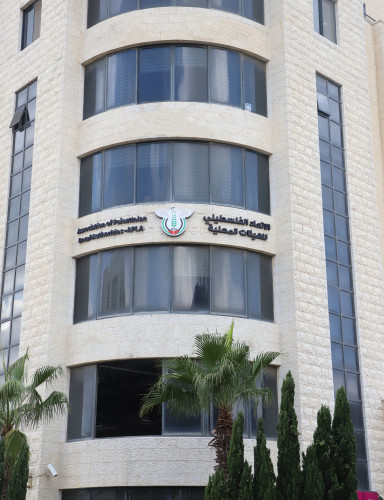






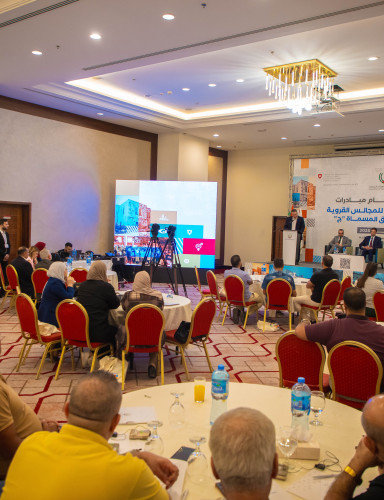


As part of its ongoing efforts to enhance the financial and organizational capacities of local government units (LGUs) and to support the implementation of decentralization as a core pillar of good local governance, the Association of Palestinian Local Authorities (APLA) held a consultative workshop, titled Local Decentralization. Bringing together the Taskforce of Financial Directors from seven LGUs, the workshop served as an opportunity to engage these LGUs in consultations on decentralization in local government. It also provided a vital platform to discuss both the challenges and opportunities associated with strengthening decentralization. This national effort is led by the National Decentralization Team, which includes several national government institutions alongside APLA. It is compiling a comprehensive study on decentralization in Palestine’s local government sector through a consultancy firm with support and funding from the GIZ Local Governance Reform Program.
The workshop opened with remarks from APLA Executive Director, Eng. Abdullah Anati, who commended the role of the participants and the Taskforce of Financial Directors. Anati stressed the importance of the meeting as a participatory dialogue platform contributing to the development of policies and mechanisms necessary to apply decentralization in Palestine. He highlighted the need to advance practical steps toward decentralized local governance and underscored the importance of providing resources to transfer or delegate powers to LGUs. Anati further emphasized the necessity of supporting LGU financial and administrative independence to help improve service quality and enhance efficient responsiveness to local community needs.
The workshop presented the methodology of the decentralization study in the local government sector and shared the key findings to date. The consulting team provided a detailed explanation of the study’s phases and objectives, focusing on the importance of reviewing current powers between the Ministry of Local Government and LGUs.
Discussions centered on functions and services that are legally mandated to LGUs, but have been reduced or fragmented by the central government. It also focused on functions and services that are considered eligible for transfer or delegation from the central government to LGUs. The legal framework for local decentralization was reviewed, along with a comprehensive financial analysis of these functions, helping participants gain a clearer understanding of the costs and resources required to implement them at the local level. The workshop included a hands-on exercise in which participants assessed the functions considered for transfer or delegation, furnishing an opportunity to exchange experiences and offer feedback reflecting the on-the-ground realities of LGU functions.
The Taskforce of Financial Directors presented key observations and recommendations, focusing on priority areas for the next phase to reinforce decentralization in the local government sector. It emphasized the need to establish a clear procedural and legal pathway for the transfer of powers, highlighting the importance of effective coordination between the central government and LGUs to facilitate the process.
The workshop further addressed technical and institutional details related to the mechanisms of power transfer, with a focus on identifying legislative and regulatory gaps that need to be addressed for a practical and effective implementation of decentralization. It also evaluated LGU readiness in terms of technical capacity and available resources to ensure successful and sustainable implementation, placing a strong emphasis on the need to provide adequate financial and human support to LGUs.
At the conclusion of the workshop, participants agreed to follow up on the study’s recommendations through dedicated APLA communication channels to ensure the findings are translated into practical, actionable steps in the upcoming period.
This workshop was part of APLA’s efforts to support development of the local government sector. It was funded by the Transparency, Evidence, and Accountability (TEA3) program, supported by the United Nations Development Program (UNDP).


