
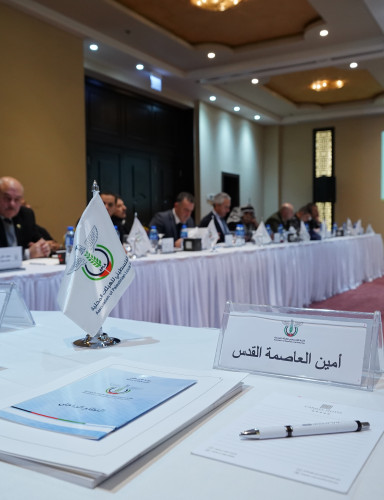
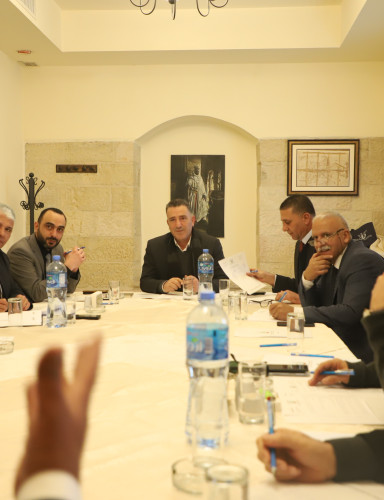



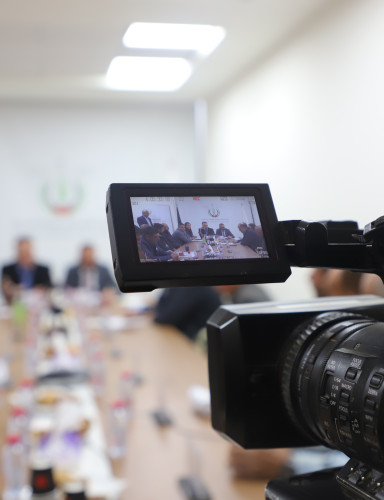
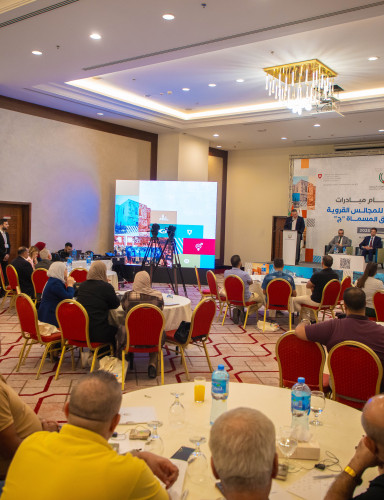


The Association of Palestinian Local Authorities (APLA) concluded a specialized two-day training titled “Crisis and Emergency Communication for Local Government Units,” organized for its Public Relations Platform, one of the technical knowledge-exchange platforms managed by APLA through its Technical Support Unit. The training brought together 18 participants representing 16 local government units (LGUs) and was facilitated by the expert in strategic communication, media, and public relations, Ms. Nibal Farasakh,
The second day focused on strengthening participants’ skills in managing communication and media responses during crises and emergencies, and enhancing their readiness to handle sensitive situations that require timely responses, accurate information, and clear messaging. The sessions tackled the role and responsibilities of official spokespersons during crises, effective engagement with media outlets and handling challenging questions, as well as managing rumors and misinformation and applying mechanisms to verify and respond to them effectively.
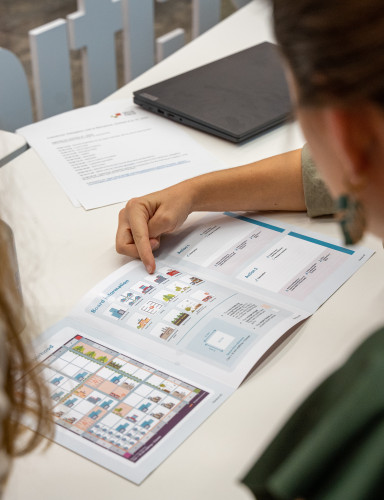
The training also covered the development of crisis and emergency communication protocols and procedures. Participants further put their newly acquired skills into practice through practical exercises and scenario-based applications designed to strengthen their ability to develop more effective institutional and media responses. The program concluded with a post-training assessment and a review of its key outcomes.
This reflects APLA’s commitment to institutionalizing communication as a core component of LGUs’ preparedness and ability to manage crises, rather than treating it merely as a tool for disseminating information. Effective communication in exceptional circumstances is essential to maintaining public trust, ensuring the timely flow of accurate information, delivering consistent official messages, and curbing the spread of rumors and misinformation. It also strengthens LGUs’ ability to manage their communication with citizens, media outlets, and relevant stakeholders, while ensuring continuity in fulfilling their roles and responsibilities toward their communities under all circumstances.
The training was implemented under the project “Mobilizing the Capacities of Palestinian LGUs through Knowledge Exchange and Alignment with the Sustainable Development Goals,” within the Local Governance Reform Program (LGRP III), funded by the German Federal Ministry for Economic Cooperation and Development (BMZ), and supported by (GIZ).


