



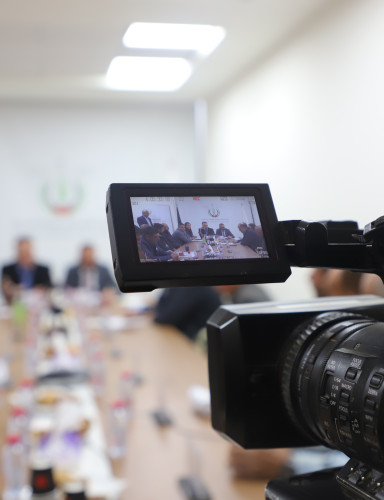


The Association of Palestinian Local Authorities (APLA) participated in an online dialogue session entitled "Towards Localizing the New Global Charter-Agenda for Human Rights in the City", organized by the Committee on Social Inclusion, Participatory Democracy and Human Rights of United Cities and Local Governments (UCLG), in collaboration with the United Nations Office of the High Commissioner for Human Rights (OHCHR), as part of the global campaign "10, 100, 1000 Human Rights Cities and Territories by 2030". APLA was represented by Ms. Ohood Enaia, Policies and Planning Unit Manager; Dr. Ahmad Jaber, Sustainable Development Goals (SDGs) Projects Officer; and Mr. Jihad Namoura, Capacity Building Officer.
The session was attended by Ms. Laura Dolci, Coordinator of the Global Alliance for Human Rights, representing the United Nations Office of the High Commissioner for Human Rights, alongside representatives of the Committee’s Technical Secretariat and the cities of Utrecht, Suwon, Rosario, and Mexico City. The session provided a platform for exchanging experiences and discussing ways to implement the new Charter at the local level.
During the session, Mr. Namoura, speaking on behalf of APLA, delivered a presentation on the Association’s role in representing Palestinian local government units (LGUs), advocating for their rights and interests, strengthening their institutional capacities, and facilitating the exchange of expertise among them. He emphasized the direct link between human rights and the day-to-day work of LGUs, including ensuring access to water and sanitation, managing waste, providing public spaces, and promoting citizens’ participation in decisions that affect their lives and communities.
The discussion also addressed the impact of the occupation and destruction in the Gaza Strip, as well as restrictions on movement, access to land, and development in the West Bank, including East Jerusalem, and their implications for residents’ rights and the ability of LGUs to deliver services and respond to community needs. Mr. Namoura stressed that restoring and sustaining essential services requires protection, adequate personnel, equipment, and resources to enable municipalities and village councils to continue fulfilling their responsibilities towards citizens. He also highlighted that ensuring residents’ access to services and their participation in local life depends on the availability of political, financial, and institutional conditions that enable LGUs to fulfil their roles.
APLA’s participation forms part of its ongoing efforts to strengthen the presence of Palestinian LGUs in international dialogues on human rights and development, bringing their realities, challenges, and experiences to international platforms. This helps highlight their role in protecting residents’ rights and ensuring the continuity of services under the exceptional circumstances facing Palestine. The participation also provides opportunities to learn from international practices and strengthen cooperation in inclusive governance, participation, accountability, and equitable access to public services.
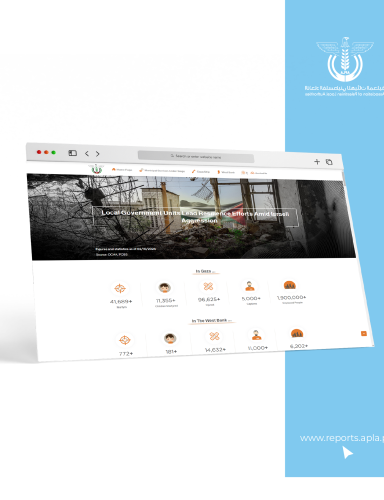
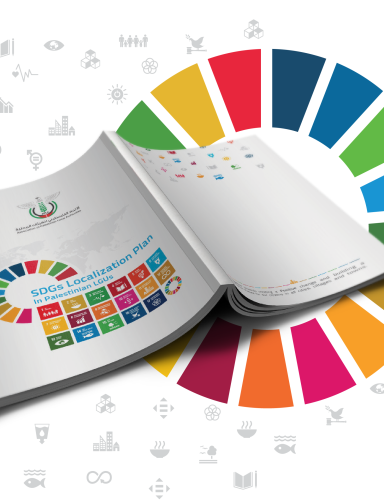
APLA continues to support LGUs in translating human rights and sustainable development principles into practical measures through its work on localizing the Sustainable Development Goals, implementing the Community Participation Program, and promoting the use of the “Baladiya Meter” platform. These efforts contribute to enhancing transparency and accountability, expanding citizens’ participation, and monitoring the implementation of municipal strategic plans, thereby supporting more inclusive local governance that is responsive to the needs of Palestinian communities.
APLA joined the global campaign in 2026, following the adoption of the New Global Charter-Agenda for Human Rights in the City during the UCLG World Congress, held in Tangier in June 2026. The Charter addresses 37 rights, in addition to a dedicated section on the rights of cities. Launched in 2022, the campaign aims to mobilize 1,000 local and regional governments committed to human rights by 2030. Part of the session was dedicated to introducing new members, exchanging experiences, and discussing ways to translate the Charter into tangible local policies, services, and practices.

