
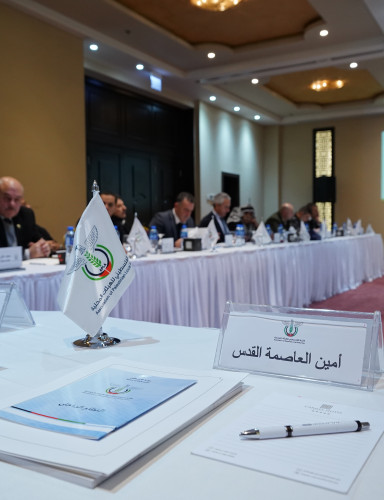

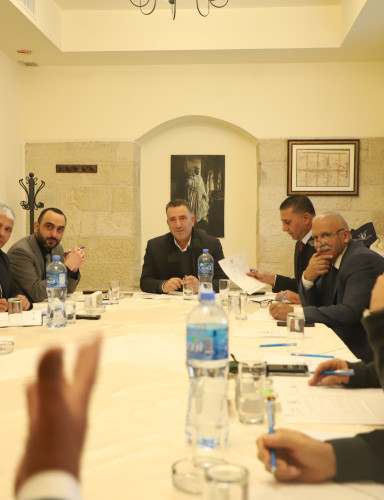



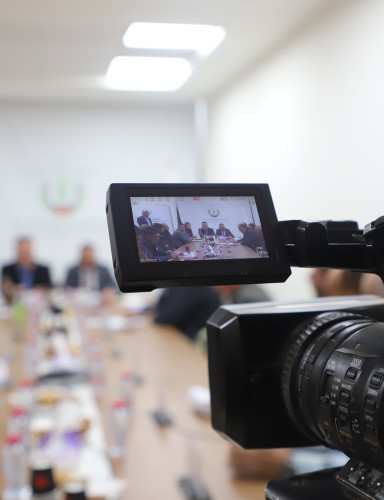

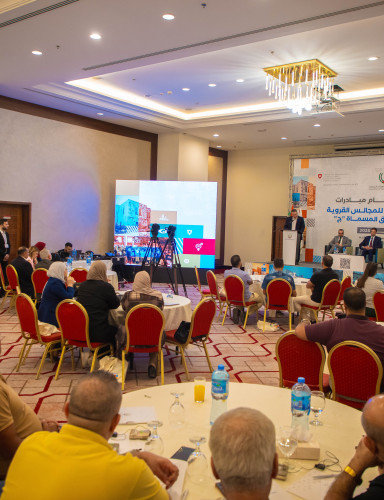


The President of the Association of Palestinian Local Authorities (APLA), Mr. Abdalkarim Al-Zubaidi, participated in the programme marking the launch of the work of the newly elected Local Government Unit (LGU) councils for the 2026–2030 term. The programme was organized by the Ministry of Local Government (MoLG) in the northern region, covering the governorates of Jenin, Tubas, and Tulkarm.
The event was attended by the Governor of Jenin, Mr. Kamal Abu Al-Rub, H.E. Dr. Sami Hijjawi, Minister of Local Governments in Palestine, the German Cooperation Programme Director, Mr. Jihad Al-Shakhsheer; as well as heads, deputy heads, and members of LGU councils in Jenin, Tubas, and Tulkarm, representatives of the Ministry of Local Government and its directorates, and relevant institutions and stakeholders in the local government sector.
In his remarks, APLA President Abdalkarim Al-Zubaidi highlighted that the work of LGUs is closely linked to the political and national context in which the Palestinian people live, amid the continued occupation, settlement expansion, and land confiscation, alongside growing economic pressures and challenges affecting the ability of local institutions to respond to citizens’ needs.
He noted that LGUs play a role that extends beyond service delivery, serving as the first line of defence for maintaining the continuity of life within Palestinian communities, preserving the presence and capacity of local institutions, and enabling communities to withstand current challenges and plan for the future. He stressed that strong local government is an integral part of strong Palestinian national institutions, and that empowering LGUs represents a direct investment in community resilience and the future of Palestine.
Al-Zubaidi further noted that the coming phase requires continued efforts to develop the local government system and strengthen decentralization, ensuring a fairer distribution of powers and resources, bringing decision-making closer to citizens, and enhancing the ability of local communities to identify their priorities and respond to their needs.
He also reaffirmed APLA’s commitment to continuing its work in partnership with the Ministry of Local Government and the Palestinian Government to develop the legislative and institutional framework for local government, while strengthening the presence of Palestinian LGUs at the regional, and international levels. He emphasized that local diplomacy is an important component of national diplomacy, and that the international presence of Palestinian cities, towns, and villages contributes to advocating for the Palestinian people’s right to development, dignity, peace, and a decent life.
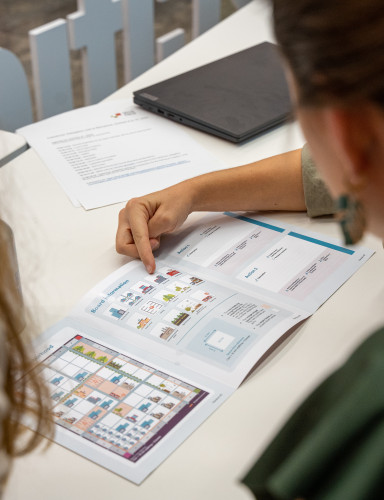
The programme included dialogue sessions addressing the realities of local government work and facilitating the exchange of experiences and practices on the future of LGUs. It also featured a presentation on the laws, regulations, and administrative, financial, and technical procedures applied by the Ministry of Local Government and its directorates. The sessions aimed to enhance the readiness of the newly elected councils for the next phase of local government work, including their ability to fulfil their duties and responsibilities towards citizens.
APLA’s participation in the programme comes as part of its role in representing LGUs, following up on issues related to the development of the local government sector, and contributing to supporting the newly elected councils during this new phase of their work.
APLA continues its efforts to strengthen communication with newly elected LGUs, follow up on their needs and priorities, and support the development of their capacities, while enhancing coordination and partnership with the Ministry of Local Government and relevant national and international institutions. These efforts aim to enable LGUs to effectively and efficiently fulfil their service delivery and development roles.


