
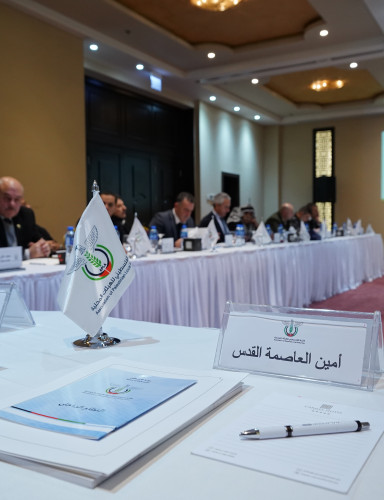

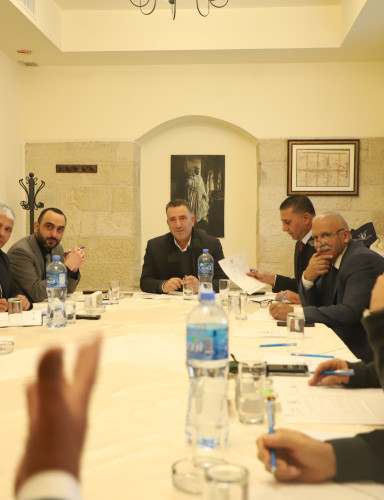

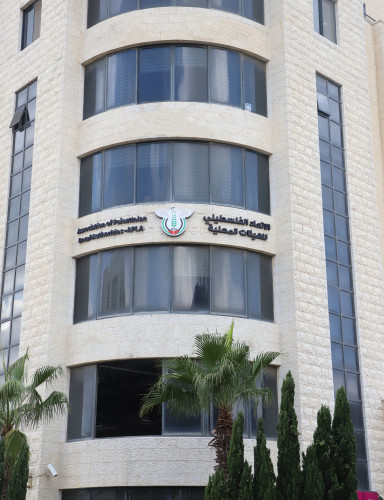


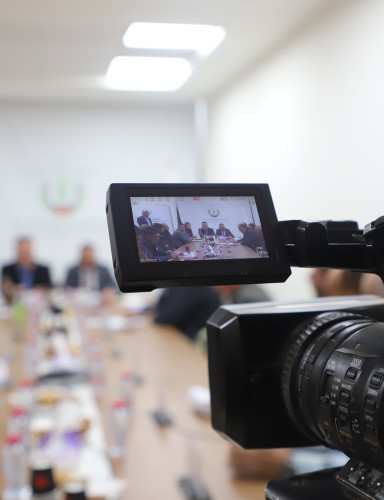

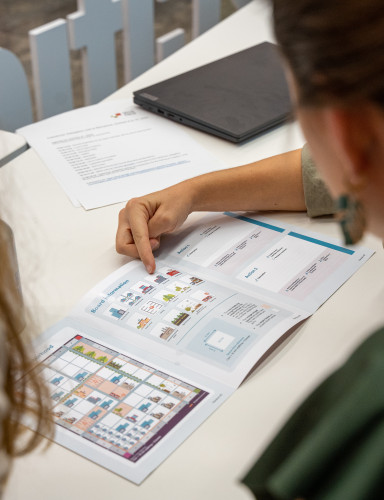
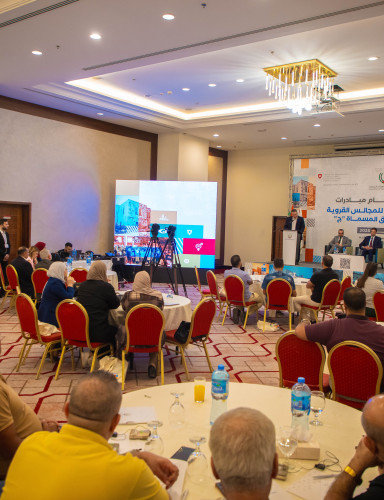


The President of the Association of Palestinian Local Authorities (APLA), Mr. Abdalkarim Al Zubaidi, and APLA Executive Director, Mr. Abdallah Anati, participated in the launch program for the newly elected Local Government Units (LGUs) for the 2026–2030 term. The event was organized by the Palestinian Ministry of Local Government and attended by H.E. Dr. Laila Ghannam, Governor of Ramallah and Al-Bireh; H.E. Dr. Sami Hijjawi, Minister of Local Government; Ms. Anke Schlimm, Head of the German Representative Office in Palestine; representatives of the Deutsche Gesellschaft für Internationale Zusammenarbeit (GIZ), the Municipal Development and Lending Fund (MDLF), and presidents and members of elected LGUs from across Palestine.
The program marked the beginning of a new cycle of local governance as part of the Ministry of Local Government's efforts to strengthen the readiness of LGUs, enable them to fulfill their responsibilities, and enhance their institutional and administrative capacities in response to the needs and aspirations of citizens. The program included a series of dialogue sessions addressing the legal framework governing the work of LGUs, planning, urban organization and engineering affairs, as well as strengthening cooperation between LGUs and governmental and non-governmental institutions.
In his remarks, APLA President Mr. Abdalkarim Al Zubaidi affirmed that Palestinian LGUs continue to fulfill their responsibilities at a time when the Palestinian people are facing one of the most difficult political, economic, and humanitarian periods in their history. He noted that LGUs continue to operate despite the exceptional circumstances and accumulated challenges they face, including the restrictions and interventions imposed by the Israeli occupation, which hinder their ability to plan, implement projects, and improve services across different areas.
Al Zubaidi stressed that, despite these circumstances, not a single municipality in Palestine has ceased carrying out its duties, nor has any local council abandoned its responsibilities. Rather, Palestinian LGUs have proven themselves to be national institutions that shoulder the responsibility of helping Palestinians remain steadfast on their land, protecting communities, strengthening resilience, and ensuring the continuity of daily life regardless of the severity of the crises. He added: “In many countries around the world, municipalities are measured by the number of projects they implement. In Palestine, however, municipalities are measured by their ability to remain steadfast. Palestinian municipalities do not operate under normal circumstances”.
Al Zubaidi also underscored the depth of the strategic partnership between APLA and the Ministry of Local Government, expressing APLA's aspiration for a new phase of local governance centered on empowering LGUs, strengthening their capacity to fulfill their national and developmental role, and serving citizens efficiently and effectively.
Al Zubaidi concluded his remarks by emphasizing that leadership is a responsibility rather than authority, a sacrifice rather than a privilege, and that it is not merely about managing crises but about creating hope through staying close to citizens, safeguarding public funds as a public trust, and upholding the rule of law as the fundamental point of reference. He added that APLA will remain the unified home for all LGUs, the advocate for their rights, the government's partner in developing the local government sector, and the bridge that strengthens cooperation with brothers and friends around the world in service of Palestine and its people.
For his part, APLA Executive Director Mr. Abdallah Anati emphasized the importance of LGUs maintaining their mandates and their fundamental role in serving citizens. He stressed that Palestinian citizens regard their local government unit as the primary and closest institution responsible for addressing their daily needs and improving the quality of public services.
Anati called on LGUs to provide clear data and information that contribute to better planning and informed decision-making, while also strengthening coordination, cooperation, and integration between LGUs and the Ministry of Local Government in support of the development of the local government sector. He further emphasized the importance of building on the achievements made in improving municipal services and infrastructure across Palestinian LGUs. He also highlighted the vital role of the central government in supporting and empowering LGUs to carry out their responsibilities, including assisting them in enforcing the law and strengthening their capacity to fulfill their developmental and service delivery roles.


