








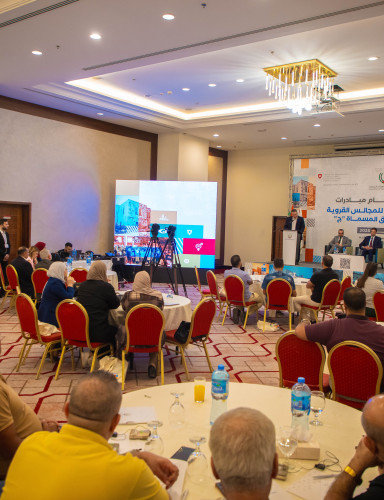


As part of embedding public hearings as a practical tool that resets the relationship between local authorities and their communities on the basis of openness and the right to information, the Association of Palestinian Local Authorities activated a pilot model for public hearings within selected municipalities.
This pilot serves as a real-life test of the “Public Hearings Guide” currently being developed by the Association, aiming to shift community participation from a reactive space into a proactive step that accompanies planning and design before implementation. This approach is implemented under the project “Strengthening Local Governance through Policy Frameworks and Community Participation,” funded by UNDP through the Transparency, Evidence and Accountability (TEA) Programme.
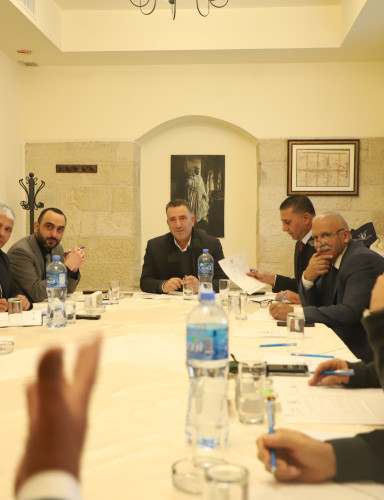
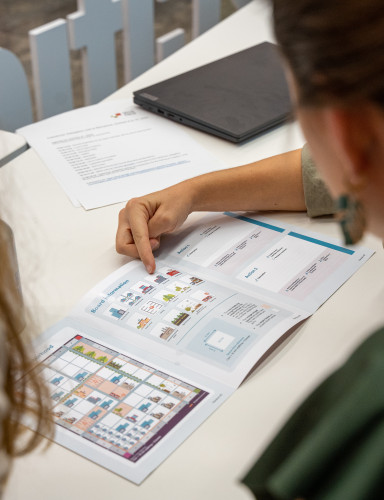
In Al-Eizariya Municipality, the public hearing focused on the proposed design of the “Al-Iskan Roundabout,” as an intervention directly affecting daily movement patterns and surrounding service dynamics. Available scenarios were presented through a balanced reading that considered traffic flow, social impact, and safety requirements. The discussion was then opened to representatives of the local community and relevant institutions to ensure that the final decision is not shaped by technical perception alone, but by shared, field-based knowledge. Mayor Mohammad Khalil Abu Al-Reesh emphasized that the municipality treats these hearings as a component of decision quality rather than a formal procedure, and that the goal is to reach implementable recommendations before finalizing the design.
In Deir Al-Ghusoun Municipality, the public hearing centered on the design of a service complex that consolidates scattered institutions and service departments into one location, reducing the cost of fragmentation, improving coordination, and enhancing citizens’ access to services. The concept was presented through the lens of the existing problem and its daily impact, followed by a detailed discussion of operational considerations with service providers, security stakeholders, and community actors to ensure the design accommodates the needs of all involved institutions. Mayor Aseel Mansour stressed that the project’s value is measured by how well it matches real needs, and that feedback collected from concerned parties must translate into concrete adjustments before approving the final plan.
Both hearings featured direct discussions on the proposed solutions and their technical and administrative feasibility. Notes and recommendations were documented in a structured manner to be considered while finalizing designs prior to implementation. Through this pilot model, APLA is working to develop a scalable mechanism that standardizes public hearings and links them to municipal planning processes—strengthening transparency in local decision-making and ensuring more accurate responsiveness to community and partner institutions’ needs.