

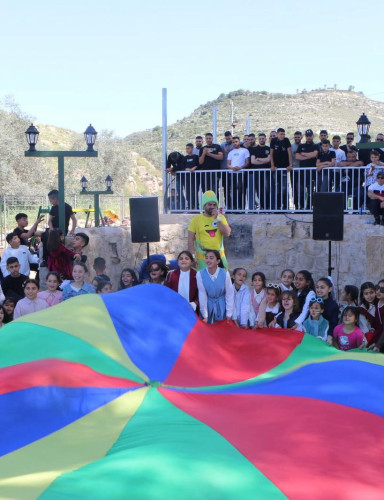
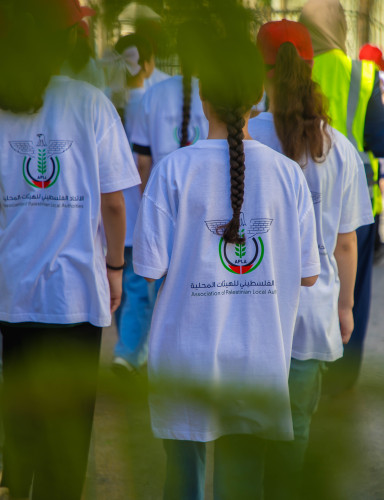
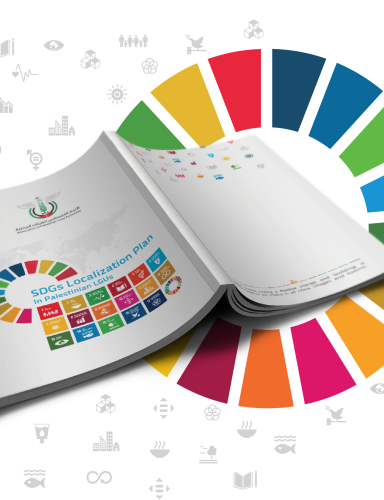


The Association of Palestinian Local Authorities (APLA) carried out a field visit to Ras Al-Tin Mixed School, located in the Bedouin community near Khirbet Abu Falah and Kafr Malik, as part of the ongoing implementation of the “Stories of Sustainable Development in Palestine” initiative. The initiative is led by APLA in partnership with the United Nations Economic and Social Commission for Western Asia (ESCWA) and the Ministry of Education. Targeting this school is part of a broader effort to link the localization of the Sustainable Development Goals (SDGs) with support to learning environments in Bedouin communities and underserved areas, as an integral component of the local fabric in which local authorities operate.
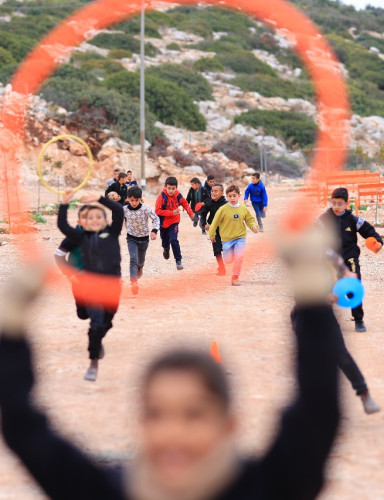
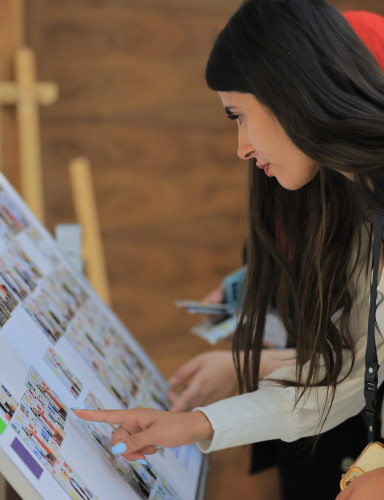
The visit included a series of awareness activities inside the school. Students led a school radio campaign introducing the SDGs, prepared awareness posters and murals displayed across corridors and courtyards, and performed a short play inspired by ESCWA’s “Stories” series, presenting themes related to the environment, natural resources and social justice in a simple, age-appropriate way that resonates with their daily reality.
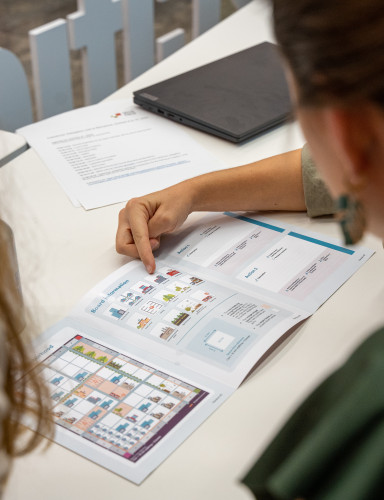
During the visit, APLA’s team, in cooperation with representatives from the Ministry of Education, also assessed the school’s educational and environmental needs and handed over a set of ESCWA storybook editions for primary and secondary grades, along with educational gifts, awareness materials and SDG-themed educational games. This component is designed to provide practical teaching tools that help teachers use stories and games to build developmental awareness among students and connect what they read in class with what they experience in their immediate surroundings.
This intervention at Ras Al-Tin Mixed School forms part of a wider track led by APLA to integrate the sustainability dimension into schools, neighbourhoods and local communities, and to strengthen the role of educational institutions in Bedouin areas as partners in promoting a culture of sustainable development, alongside local authorities and national and regional supporting institutions.