
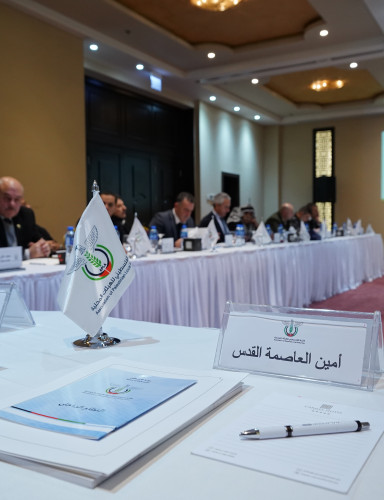



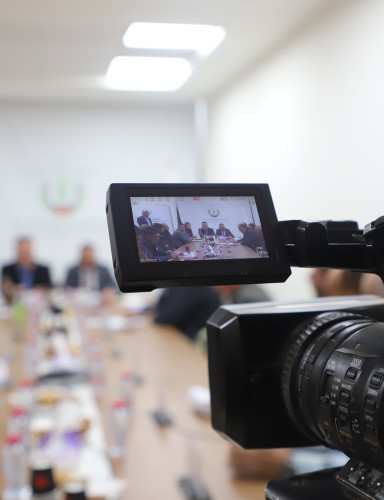
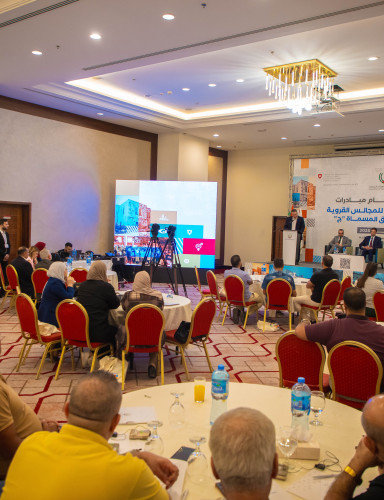


A regional workshop on climate adaptation and subnational climate finance was held at the ESCWA headquarters in Beirut, bringing together municipalities from Palestine, Jordan, Lebanon, and Syria. The workshop was organized through a partnership that included ESCWA, the GAP Fund, UN-Habitat, and the Global Covenant of Mayors for Climate and Energy (GCoM). The Palestinian participation formed part of a broader cooperation track led by the Association of Palestinian Local Authorities (APLA) to strengthen the readiness of local governments to design integrated and finance-ready climate projects.
Palestine was represented by Hebron Municipality, Ramallah Municipality, A’lar Municipality, and Abasan Al-Kabira Municipality, along with APLA’s Manager of Programs and Policies, Eng. Ohood Enaia. This participation followed an online preparatory training phase that had previously targeted a wide group of Palestinian local governments.
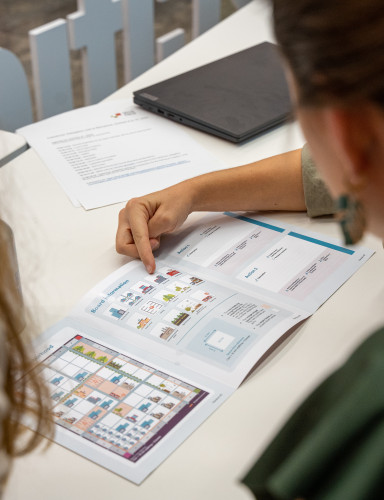
The workshop adopted a progressive, hands-on methodology that guided participants from understanding local climate challenges to shaping well-structured project concepts. Sessions focused on problem analysis, priority setting, SMART objective formulation, and logical framework development. The program also included practical tools commonly used by international institutions, in addition to country-based working groups tasked with gradually developing project ideas aligned with climate finance requirements.
During the workshop, the participating Palestinian municipalities presented four initial project drafts addressing solid waste management, water resource protection, renewable-energy-based desalination, and the development of green pathways. These drafts were thoroughly reviewed in technical sessions aimed at refining methodologies, identifying gaps, and rebuilding project components, including expected results, monitoring indicators, risks, and feasible implementation arrangements.
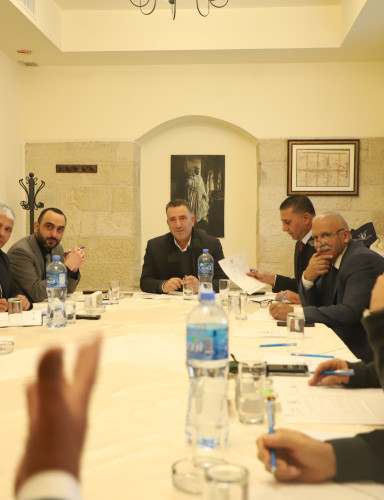
The workshop’s interactive approach combined technical presentations, group exercises, and peer review, enabling municipalities to revise their project components directly with experts from ESCWA, the GAP Fund, and UN-Habitat. This process allowed participants to deepen their understanding of donor expectations, particularly regarding feasibility, impact, and sustainability.
APLA continues to follow up on this track with the participating municipalities, in cooperation with the Environment Quality Authority, to finalize project proposals over the coming period and prepare them for submission to regional and international climate finance programs. This effort forms part of APLA’s broader approach to enhancing the ability of Palestinian local governments to access quality funding opportunities and develop more responsive, community-driven climate interventions.