
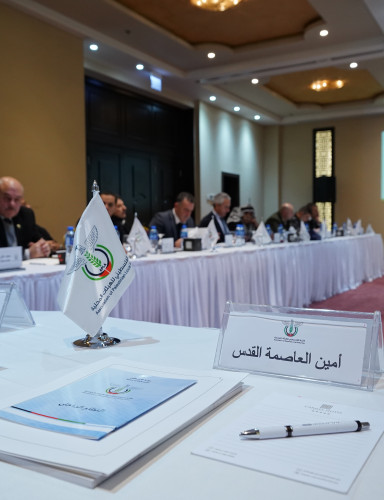
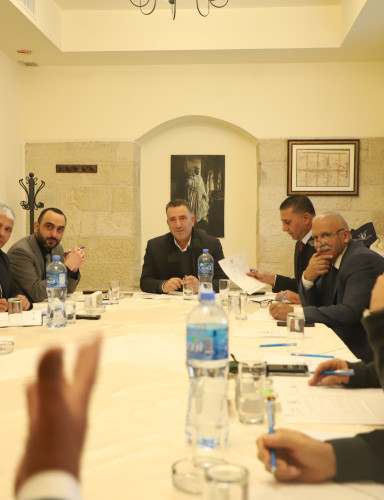

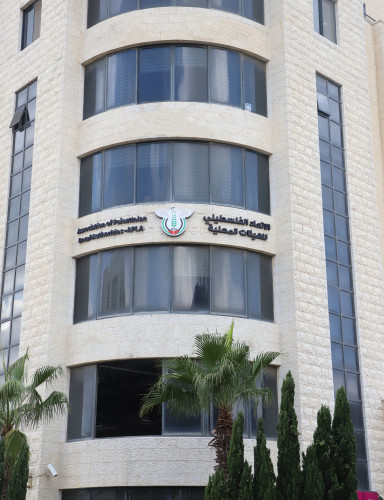

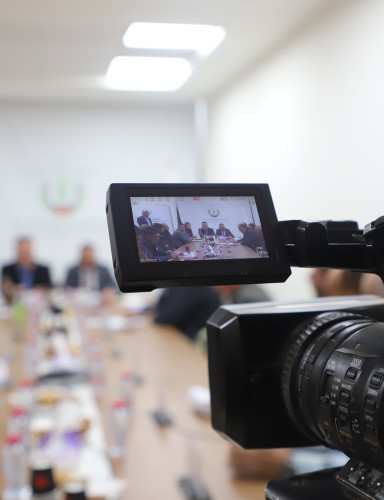

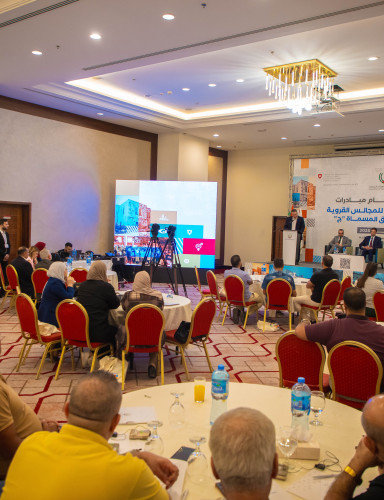


Under the auspices of His Excellency President Mahmoud Abbas, the Association of Palestinian Local Authorities (APLA) inaugurated the proceedings of the Local Government Unit (LGU) Mayors Forum. The event was attended by President’s representative, Mahmoud al-Aloul, Minister of Local Government, Dr. Sami Al-Hajjawi, and Jaco Kellers, representative of the United Nations Development Program/Program of Assistance to the Palestinian People (UNDP/PAPP). The forum also brought together members of APLA Administrative Committee, headed by APLA President, Abdul Karim al-Zubeidi.
This forum convened amid escalating political, economic, and humanitarian challenges that have deeply impacted LGU performance. This underscores the urgent need for a unified national vision to reposition local governance as a central institutional actor in resilience and survival strategies and reinforce its role in leading local development efforts within the current Palestinian context.
In his opening remarks, APLA President Abdul Karim al-Zubeidi stressed that the forum convened at a critical national moment requiring a serious reassessment of the role of local governance and its relationship with central government. Al-Zubeidi emphasized that, despite eroded mandates and limited resources, LGUs continued to serve as the first line of defense for Palestinian society. “What is needed now,” he said, “is not day-to-day crisis management, but the formulation of a national vision that repositions local governance as an integral component of the national project, in line with the messages conveyed in the recent meeting with President Mahmoud Abbas, affirming municipalities as genuine partners whose support requires practical legislation and policies to secure their role and powers.”
Mahmoud al-Aloul, President Abbas’ representative, conveyed greetings from the political leadership and underlined the crucial role of LGUs in defending the land and national identity, particularly at this juncture when Palestine faces structural attempts to dismantle its geographic and institutional existence. Al-Aloul commended APLA’s efforts in representing LGUs and creating a space for open national dialogue between councils and government bodies. He highlighted the importance of producing actionable recommendations that reflect genuine priorities in terms of services, powers, and emergency response.
Dr. Sami al-Hajjawi, Minister of Local Government, reaffirmed the ministry’s commitment to partnership with APLA in re-evaluating and advancing the local governance system through a realistic vision that responds to current political conditions and pressing needs on the ground. Al-Hajjawi noted that the ministry remains open to discussions on all proposals that could enhance local powers and improve the administrative and legislative environment, whether through updating the LGU Law or developing a practical model for decentralization. He described the forum, held with the participation of elected LGU Mayors, as a healthy indicator of the sector’s vitality and a sign of the need to institutionalize continuous dialogue channels to ensure coordination and policy coherence.
Jaco Kellers, UNDP/PAPP representative, stressed the importance of the ongoing partnership with APLA and the vital role of municipalities in protecting vulnerable communities, especially in isolated and marginalized areas. Kellers reaffirmed the UNDP/PAPP commitment to supporting Palestinian LGUs through capacity development initiatives, improved governance practices, and flexible citizen-centered response tools. He also welcomed the forum’s timing, considering its outcomes an important reference for future collaboration between APLA and relevant government stakeholders.
The opening session featured strong engagement from participating LGU Mayors. In subsequent discussions, they stressed the need to protect municipal powers from further erosion, enhance transparency in central–local relations, and ensure the availability of practical tools to implement decentralization on the ground.
The forum was held over two days with support from the UNDP Transparency, Evidence, and Accountability Program (TEA3). The agenda included closed policy sessions that addressed three main themes: eroded powers, a decentralization model suited to the Palestinian context, and updating of LGU Law No. 1 of 1997. Deliberations aimed to produce a consensus-based reference document along with a set of practical measures to follow up on the forum’s outcomes.


