
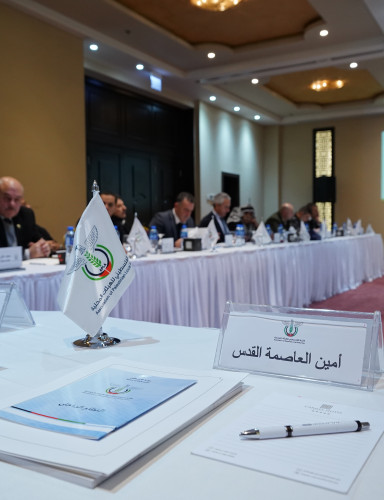

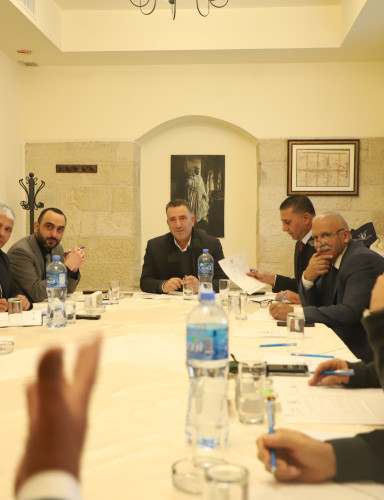



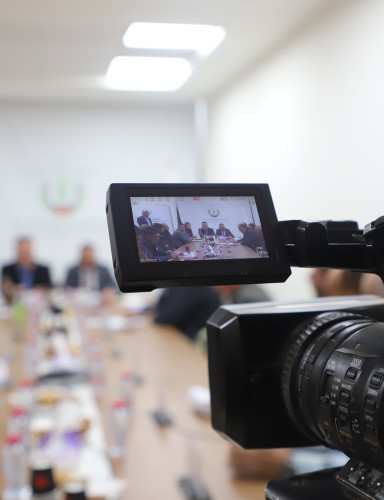

In partnership with the technical team of Beita Municipality, the Association of Palestinian of Local Authorities (APLA) received the Improving Organic Waste Management and Operating the Organic Composting Facility project, implemented within the framework of the Local Authorities Network for Sustainable Development (LAND) initiative. This intervention is part of APLA’s efforts to strengthen integrated environmental management and empower local government units (LGUs) in developing sustainable waste management models that respond to growing environmental challenges in targeted areas, enhancing service quality and optimizing the use of local resources.
The project is one of the main interventions provided for by the Regional Environmental Plan for the Southern Nablus cluster. It aims to address environmental challenges caused by the accumulation of mixed waste and lack of an organized sanitary landfill, especially in the produce market area of Beita, which generates large quantities of organic waste daily. The intervention focuses on developing an integrated model for organic waste management at the cluster level to reduce environmental pollution and promote sustainable resource management practices.
The project included the rehabilitation and operation of the organic composting facility in Beita Municipality, through infrastructure maintenance, equipment upgrades, and a partnership with the private sector to ensure efficient and sustainable operations. A comprehensive capacity-building program was also implemented for administrative and technical staff. A monitoring and evaluation system was also introduced to enhance operational efficiency and improve the quality of locally produced organic compost to serve the agricultural sector and reduce dependence on imports.
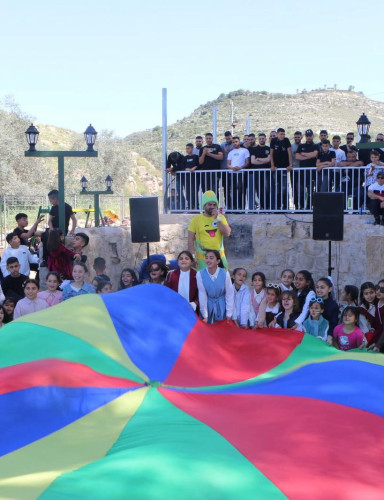
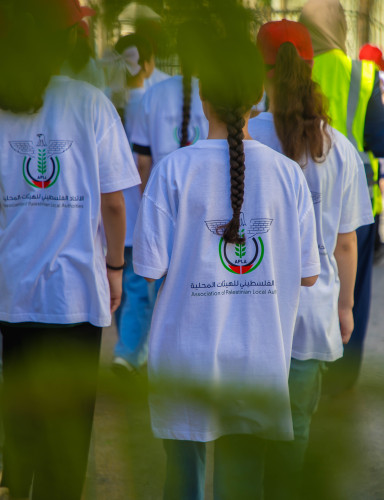
In parallel, a pilot program was launched for sorting and collecting organic waste at selected locations in the town, including the central market, the main street, a residential neighborhood, eight schools, and two public parks. Special containers were distributed and environmental awareness programs were launched. Building on previous campaigns conducted by APLA in cluster schools, these aimed at raising community awareness and ensuring active public participation in this environmental transformation.
This project is one in a series of strategic interventions implemented by APLA under the Local Authorities Network for Sustainable Development (LAND) project. Serving as a pioneering model of decentralized international cooperation, this initiative is led by Palestine in partnership with the Italian Agency for Development Cooperation (AICS), Union of Municipalities of Umbria, Union of Municipalities of Trasimeno, and FELCOS Umbria. The project seeks to redefine the role of local governance as a key driver of equitable and sustainable development, enabling LGUs to play a central role in environmental protection, efficient resource management, and enhancement of community well-being in the face of complex challenges.
