
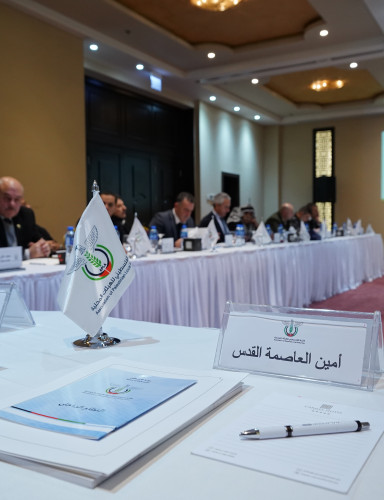

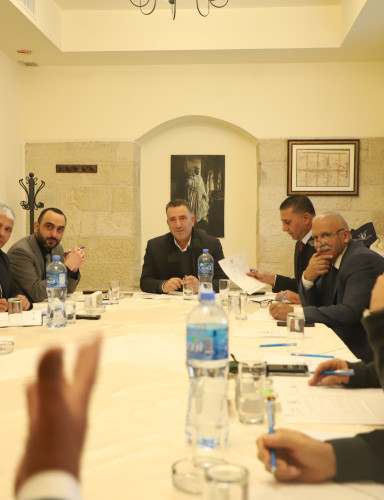



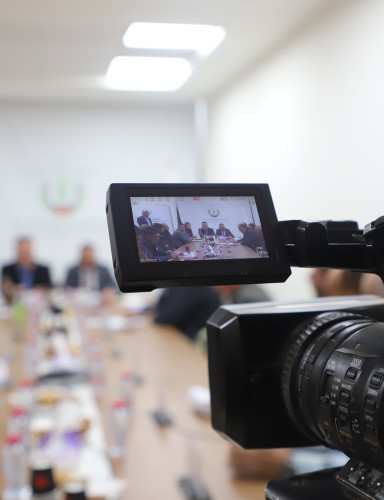

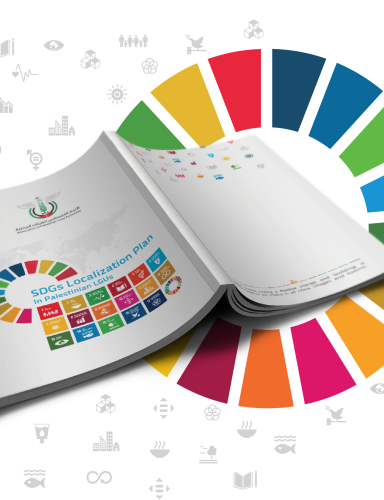
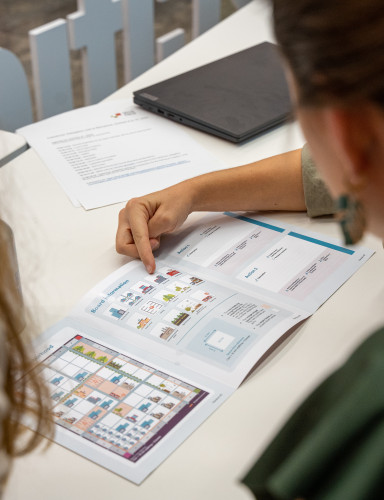
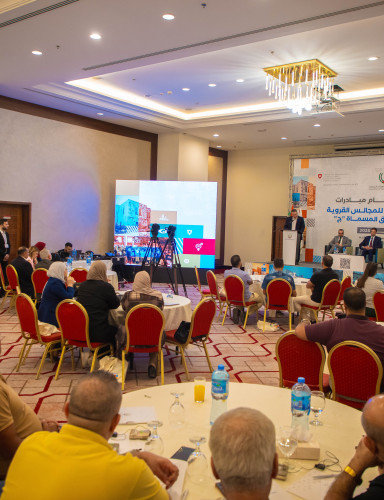


In tandem with its ongoing efforts to strengthen knowledge exchange and collaboration among Palestinian local government units (LGUs), the Association of Palestinian Local Authorities (APLA) organized a workshop to launch the Sustainable Development Goals (SDGs) Hub. Bringing together representatives from 26 LGUs across different governorates, the event aimed to provide an innovative institutional mechanism for knowledge sharing and joint action among municipalities. It supports efforts to localize the SDGs at the municipal level and enhance LGU technical and professional capacities.
The workshop opened with a presentation by Dr. Ahmed Jaber, APLA SDG Localization Project Coordinator, who introduced the concept and rationale for creating the SDG Hub. Jaber explained the hub’s role as part of the network of APLA-led knowledge hubs, designed to ensure continuous improvement of LGU performance through practical tools such as self-assessment, phased planning, and experience-based learning. He also highlighted APLA’s efforts to advance SDG localization.
Eng. Amneh Abu Sharar, Head of the City Beautification Department at Al-Bireh Municipality, delivered a historical overview of the evolution of sustainable development, highlighting key milestones such as the Stockholm Conference, Rio de Janeiro Summit, Millennium Summit, and 2015 Summit. Abu Sharar analyzed the guiding principles that underpinned the SDGs and provided a detailed comparison between SDGs and earlier Millennium Development Goals.
Eng. Fida’ Azem, Director of the Engineering Department at Beituniya Municipality, explored the interrelated dimensions of the SDGs, which are integrated through a five-element perspective: People (justice and human dignity), Planet (environmental sustainability), Prosperity (inclusive economic growth), Partnership (international cooperation), and Peace (stability and institutions). Azem further emphasized the importance of localizing the SDGs the goals within the Palestinian context.
Dr. Amal Hudhud, Director of the Strategic Planning and Economic Development Unit at Nablus Municipality, presented an overview of the roadmap for the SDG localization plan developed by APLA. Hudhud shared Nablus Municipality’s experience in integrating the SDGs into its daily operational plans while aligning them with its programs and development projects. Hudhud provided concrete examples illustrating how global goals could be converted into measurable and actionable local implementation plans.
Ahmed Atiyyeh, Director of the Statistical Monitoring Department at the Palestinian Central Bureau of Statistics, moderated an interactive training session on indicators and metadata. Atiyyeh focused on mechanisms for measuring progress in SDG implementation, importance of clear indicators backed by accurate data, and practical challenges municipalities face in this area.
Eng. Uhoud Enayah, Director of APLA Programs and Policies, summarized upcoming strategic awareness campaigns that APLA would implement in partnership with LGUs to highlight municipalities’ contributions to achieving sustainable development and strengthen community engagement. Seeking to stimulate local action and unify development discourse at the municipal level, these campaigns will include media and digital initiatives under slogans such as Towards a Sustainable Future, Development Starts Locally, and Partnership in Development for All,
This workshop was part of the Municipal Technical Exchange Hubs, implemented in partnership with the GIZ Local Governance Reform Program (LGRP). These include six core hubs: Engineering and Planning, Financial Management, Public Relations, Innovation and Creativity, Sustainable Development Goals, and Village Councils.
