





The Association of Palestinian Local Authorities (APLA) continues to implement an International Partnerships and Twinning Program as a central pillar of its Strategic Plan 2023-2027. The program seeks to institutionalize international cooperation for Palestinian local government units (LGUs) and reinforce their role as active and recognized actors and partners on the international stage.
This program reflects a qualitative shift in APLA’s approach to international municipal relations. It aims to develop a sustainable institutional framework for partnerships and twinning that responds to the real needs of municipalities, translating into tangible cooperation pathways, knowledge exchange, and development initiatives with immediate impact. It is grounded in a philosophy that embeds partnerships at the core of municipal performance, not as peripheral or symbolic activities, but as strategic tools that strengthen local planning and institutional resilience.
Since its launch, the program has put in place a cumulative methodology, beginning with the collection and analysis of data from 63 Palestinian municipalities regarding the current state of their international partnerships. This effort has built a comprehensive knowledge base to guide interventions and design evaluation and support tools tailored to municipalities’ degree of readiness and available opportunities. APLA is now working to expand this knowledge base in preparation for broadening the program’s application.
The program focuses on developing a toolkit of reference standards, including support for municipalities in building structured profiles, raising awareness of their international roles, and enhancing their readiness to engage in long-term twinning relationships rooted in local development priorities. It also aims to produce professional guides and procedural models that help unify institutional approaches and foster a common language between Palestinian municipalities and their international counterparts.
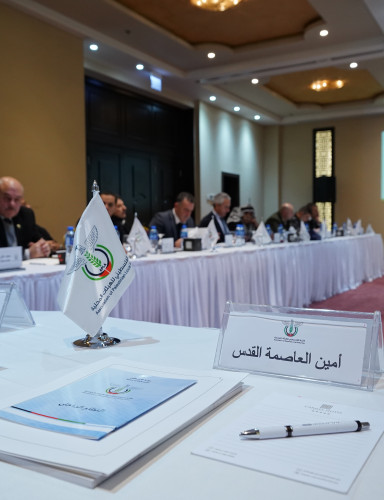
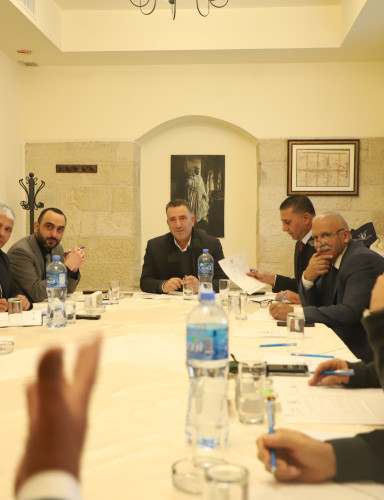
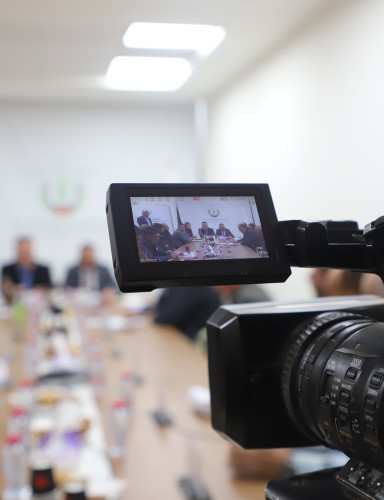
Within this framework, the International Partnerships and Decentralized Cooperation Taskforce has worked hand in hand with APLA to implement the program from its early stages. The taskforce includes representatives from 15 Palestinian municipalities selected for their prior experience in international cooperation and participation in similar contexts. It meets regularly as an interactive platform to monitor program implementation, share knowledge among municipalities, and transfer expertise to those engaging in international relations for the first time. This ensures sustainable impact and horizontal knowledge diffusion across the municipal network.
The taskforce plays a pivotal role in driving the program’s core interventions. These include developing foundational tools such as municipal profiles and a self-assessment tool to measure readiness, as well as contributing to the production of a national reference guide on twinning and the design of a tailored training package to strengthen institutional identity and international communication. The taskforce also empowers municipalities to build strategic partnerships that respond to genuine local needs, activating dialogue platforms, and facilitating networking efforts with partner municipalities worldwide, all within a structured and measurable vision.