
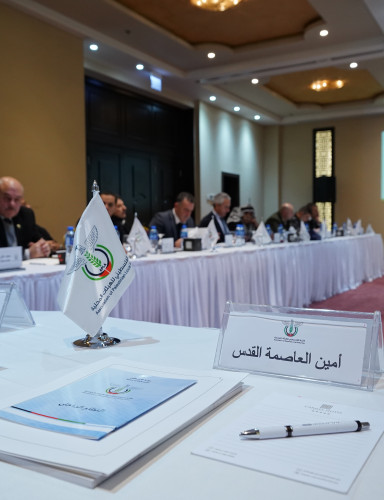

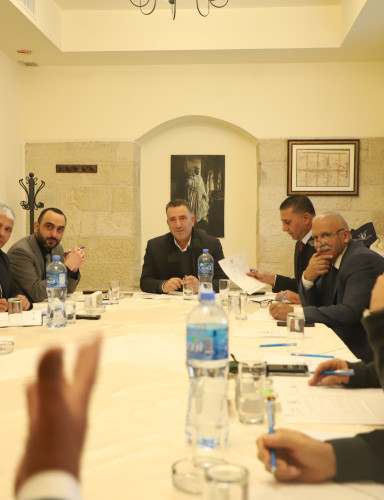

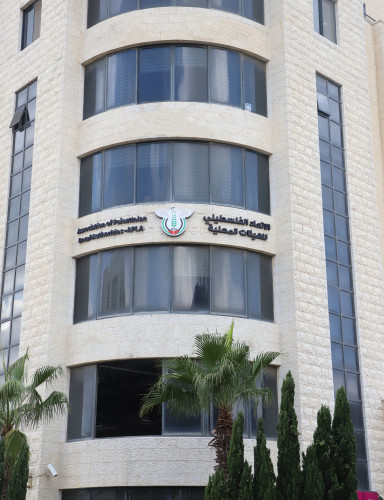


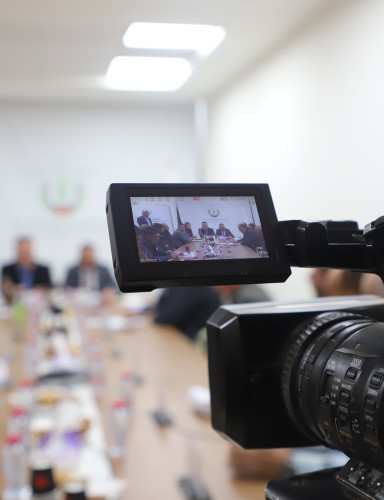

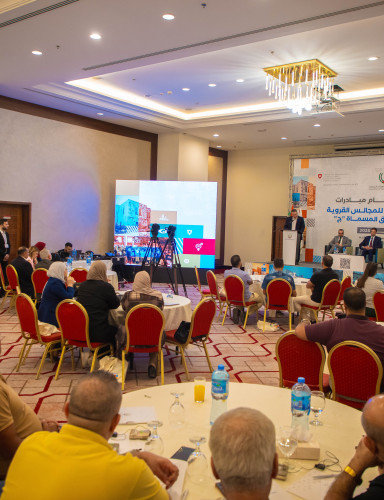


In collaboration with the Association of Palestinian Local Authorities (APLA), the Palestinian Environment Quality Authority (EQA) held a focused workshop, titled The Legal Framework, Planning, and Financing Related to Climate Change, on Tuesday in Ramallah. The event brought together 64 representatives from local government units (LGUs), also members of APLA’s Engineering and Planning Hub and the Sustainable Development Goals (SDGs) Localization Hub.
PEQA Deputy Head, Eng. Ahmed Abu Thaher, stated that the workshop was held in line with the directives of EQA Head, Dr. Nisreen al-Tamimi. In addition to strengthening cooperation with LGUs, Dr. Al-Tamimi stressed that LGUs will be provide with needed technical support to integrate climate change issues into local development plans in alignment with Palestine’s national and international commitments.
Abu Thaher affirmed that addressing climate change challenges was a national imperative that required coordination among institutions as well as the provision of legal, planning, and financial tools to ensure the sustainability of climate action in Palestine. Israeli barriers restrict access to resources and limit the ability of LGUs to implement respective projects.
In his comments, Abu Thaher reviewed the catastrophic environmental impact of the ongoing Israeli aggression on the Gaza Strip, which has led to total environmental devastation. This has included destruction of infrastructure, sewage systems, and treatment plants; widespread contamination of soil, water, and air; and accumulation of millions of tons of rubble and hazardous waste.
Eng. Abdul Mu’min Afaneh, Director of APLA Legal and Technical Support Unit, highlighted that dealing with climate change “is no longer a technical option. Rather, it is a national priority directly tied to the right to development and environmental sovereignty.” Afaneh pointed out that APLA was in the process of establishing LGUs as leading actors in climate response by developing practical planning and financing tools as well as by promoting the institutionalization of environmental action within municipalities and village councils. This approach aims to generate tangible outcomes on the ground, and not just on paper.
Afaneh also noted that the workshop aligned with APLA’s efforts to harmonize LGU operations with the Agenda for Sustainable Development, particularly SDG 13 on climate action. He stressed that APLA prioritized enabling LGUs to effectively respond to growing environmental needs within the Palestinian context. According to Afaneh, this support is not limited to technical aspects; it includes building a comprehensive resilience system to ensure that LGUs can continue fulfilling their role despite complex challenges, first and foremost the occupation, resource scarcity, and accelerating climate change.
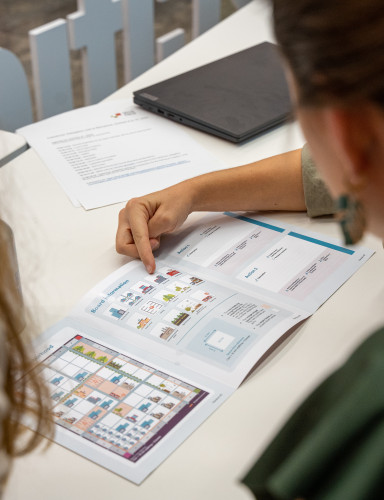
The workshop explored ways to integrate the environmental dimension into local planning and mechanisms for developing practical climate change responses rooted in effective legal and financial tools. These would be tailored to the real needs of LGUs and their pivotal role in protecting the environment and promoting climate justice. Topics also included climate planning, financing prioritization, and revision of regulatory frameworks. In addition to LGU representatives, a select number of experts from both EQA and APLA presented relevant challenges and on-the-ground experiences.
EQA representatives delivered technical and legal presentations on national climate strategies, priorities of affected sectors, climate financing in the Palestinian context, environmental awareness, and mechanisms for community engagement. By contrast, LGU representatives addressed the challenges they face in incorporating climate issues into LGU mandates.
The workshop included a review of relevant national and international experiences and discussed priorities for upcoming phases of work. These included raising environmental awareness and identifying the technical and institutional capacity-building needs of LGUs.
Participants recommended strengthening technical capacities of LGU staff in climate planning and financing, enhancing coordination between LGUs and national government, and establishing implementation frameworks to ensure the integration of climate policies into municipal operations.
The workshop was part of national efforts by EQA and APLA to strengthen the ability of LGUs to respond to environmental challenges. It was held within the framework of the APLA-led Municipal Technical Exchange Hubs, supported by the GIZ Local Governance Reform Program (LGRP). The program aims to develop specialized professional spaces to enhance LGU performance and promote their role in adopting more equitable and sustainable development models.
