

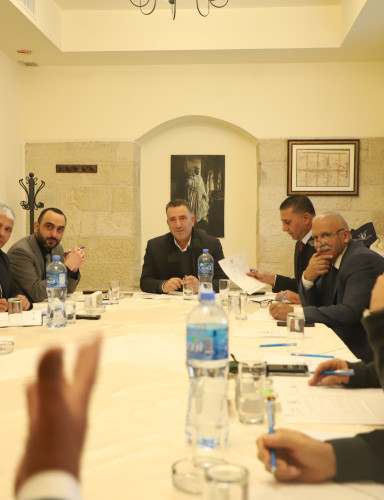



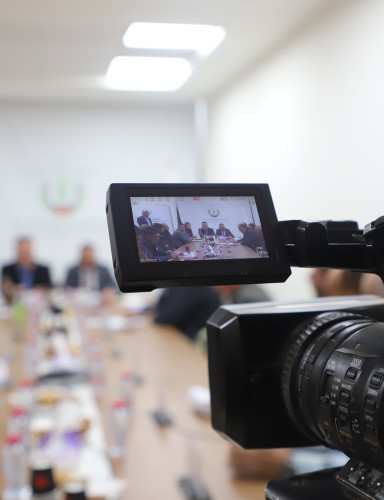

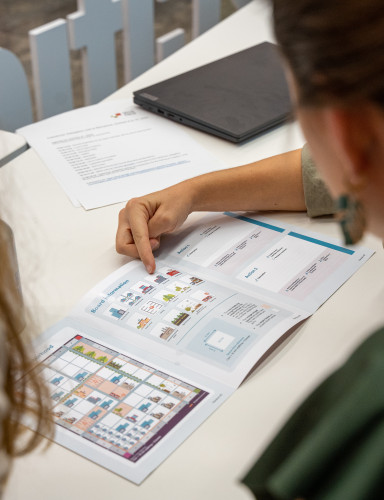
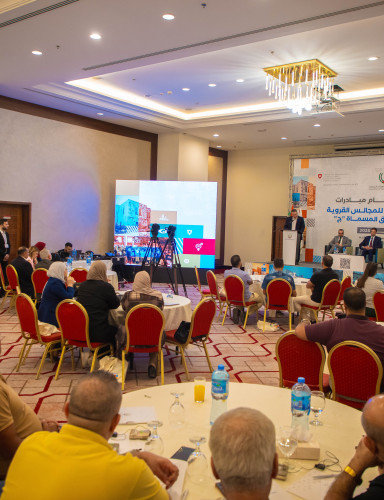


In the context of the Local Authorities Network for Sustainable Development (LAND) project and with the participation of active civil society organizations, the Association of Palestinian Local Authorities (APLA) provided specialized hands-on training on the operation and use of organic compost production units. This training falls within APLA’s ongoing efforts to localize the concepts of circular economy through practical approaches that enhance the efficiency of, and redefine, organic waste management as a resource that can be utilized to support sustainable agriculture and reduce environmental degradation.
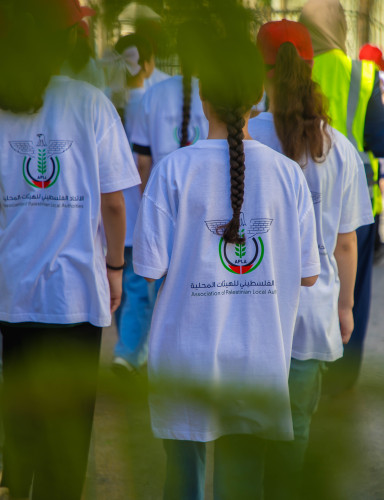
The training was delivered by Agricultural Engineer Ayham Omar, a representative of ALTAYSEER ENVIROTECH. This company is the partner responsible for supplying organic compost production units to schools located within the local government units (LGUs) targeted by the project in the communities of Beit Liqya, Ni’lin, Beita, and Huwwara. The training focused on enabling participants to operate these units effectively and presented scientific practices for producing high-quality organic compost. It placed an emphasis on integrating this technology into the school environment as an educational behavior that instills environmental responsibility in younger generations.
Participants included representatives from the Association of Women’s Action – the main implementing agency of environmental awareness-raising activities in schools, Rowad Society for Social Development, and Witness Center for Citizen Rights and Social Development. The training aimed to promote the role of civil society as a community driver to foster informed, sustainable and environmentally responsible behavioral patterns.
This activity constitutes a central component of the interventions under the LAND project, led by APLA in partnership with the Italian Agency for Development Cooperation (AICs) and various local and international partners. The project aims to build the capacities of LGUs to produce sustainable local solutions that treat waste not as a burden, but as an economic and environmental opportunity.
