
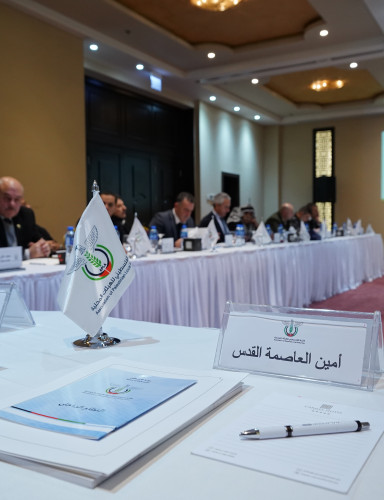
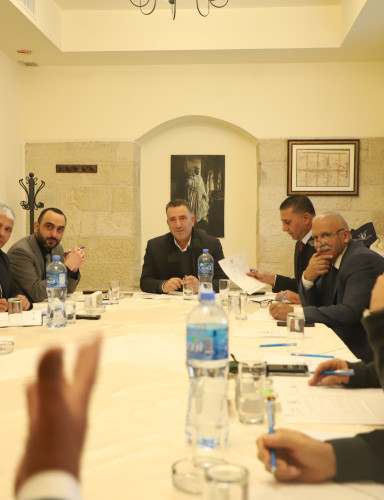


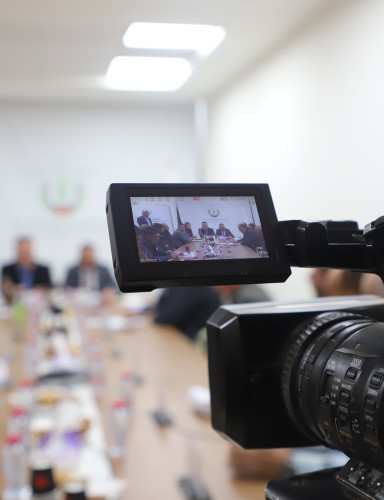

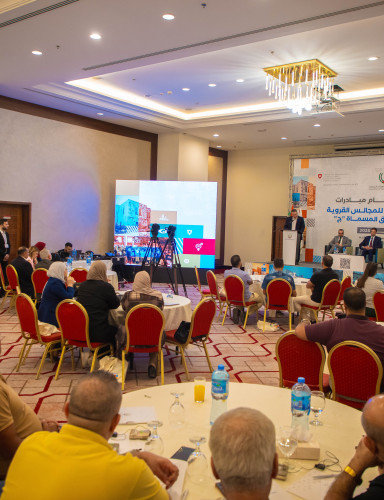


The Association of Palestinian Local Authorities (APLA) organized a meeting of the Taskforce for the Inclusion of Marginalized Groups in Local Government Units (LGUs) to explore ways to promote gender mainstreaming and inclusion in LGU Humanitarian Response Plans 2025. The meeting included a review of plans and programmes that reflect effective local response, take into account the needs of various groups, contribute to a more inclusive and equitable humanitarian response. The event was held on Zoom with 19 LGU representatives and members of the Taskforce.
In her opening remarks, Abeer Nouh, APLA Gender Coordinator, highlighted the importance of inclusion and gender mainstreaming in LGU humanitarian response plans. These play a pivotal role in fulfilling the needs of all community groups both effectively and flexibly. Nouh stressed the need for collaboration and experience sharing among LGUs to ensure the development of more inclusive policies and programmes, which reflect national priorities, address emerging challenges and build sustainable capacities to respond to different developments. A summary also reviewed meetings held with the Taskforce members in 2024.
Tulkarem Municipality presented its Action Plan 2025. Based on an inclusive and equitable approach, the plan was compiled to meet current challenges and developments. Fadia Abdul Aziz, Head of the Strategic Planning Department, reviewed the impact of the recent war on Tulkarem as one of the most affected areas by Israel’s escalation. Abdul Aziz emphasised the importance of integrating emerging needs into action plans and implementing programmes and services with a view to fulfilling community needs from across the spectrum, placing a special focus on the most affected and marginalized groups. This should enhance LGU capacity to provide effective response during states of emergency.
Dura and Anabta municipalities made interventions on key gender and inclusion programmes and activities to be implemented in 2025. Ruba al-Arab, Head of the Community Rehabilitation department at Dura Municipality, reviewed initiatives to promote social inclusion by improving community engagement and integration in local development processes. Hiba Mustafa, Public Relations Officer at the Anabta Municipality, presented on activities targeting the most effected groups. She noted the need to incorporate social dimensions into LGU development plans, ensuring a more inclusive and equitable response.
In the context of the efforts to reinforce inclusion, Munir Barakat, Head of the Financial of Administrative Section at Faqqu’a Village Council, presented a comprehensive plan created in cooperation with APLA. The plan assesses the integration of inclusion principles and Sustainable Development Goal 5. The council also made a briefing on key projects and programmes aimed to promote justice in service provision, ensuring equitable and sustainable access for all community groups.
The meeting was part of the APLA efforts to enhance LGUs’ role in supporting the most affected and marginalized groups by developing plans and programmes that achieve sustainability and inclusion and scale up LGU institutional capacity. Implemented in partnership with the GIZ Local Governance Reform Programme, the project was an activity of the Taskforce for the Inclusion of Marginalized Groups in Palestinian LGUs to deal with current challenges and accomplish inclusive and sustainable development.
