


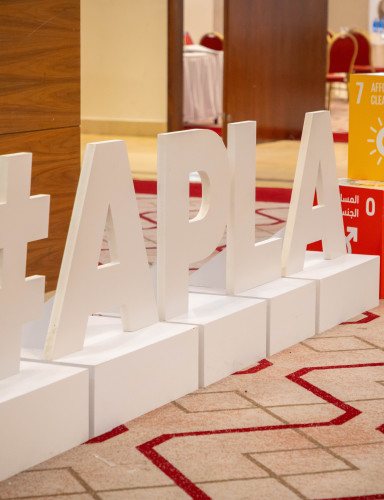

APLA Barcelona Provincial Council and Barcelona Municipality Launch the Catalan–Palestinian Municipal Cooperation Initiative, District 11: Cities of Palestine, in Amman
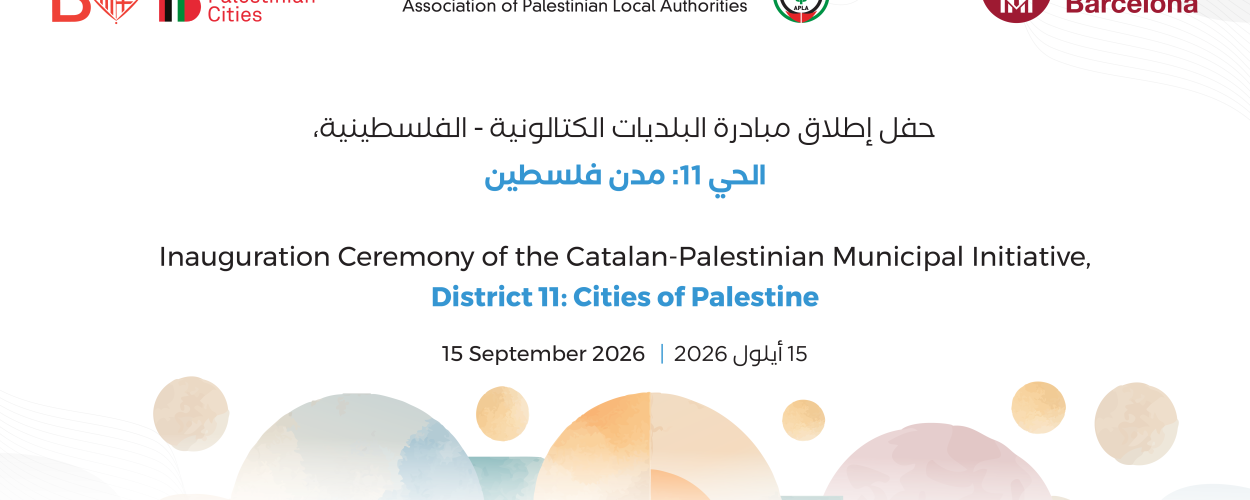
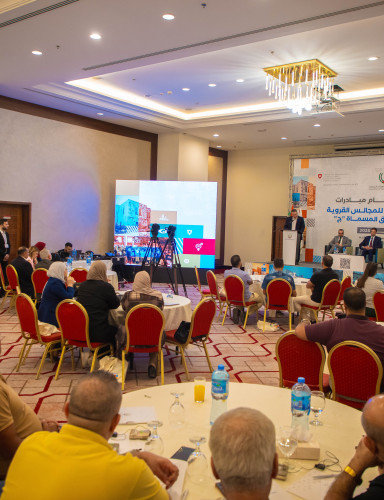
The Association of Palestinian Local Authorities (APLA), in partnership with Barcelona Provincial Council and Barcelona City Council, launched the Catalan–Palestinian Municipal Cooperation Initiative, District 11: Cities of Palestine, in a step aimed at strengthening decentralized cooperation and direct partnerships between Palestinian Local Government Units (LGUs) and their counterparts in Catalonia, while enhancing the presence of Palestinian cities in international cooperation networks.
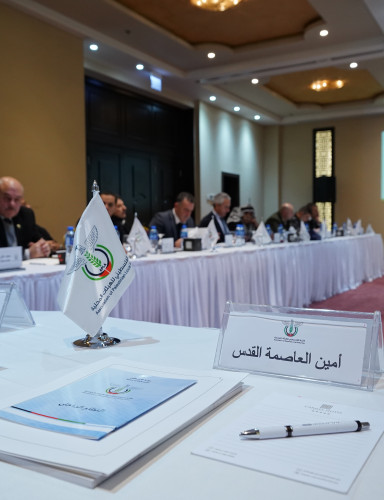
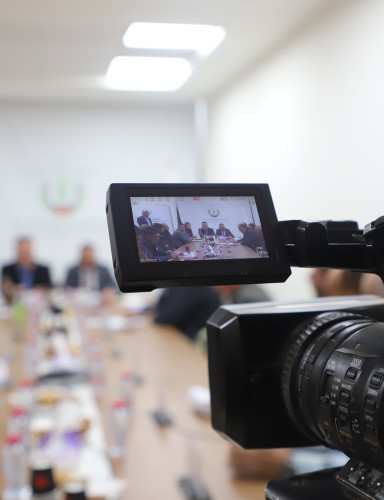
The initiative was launched during an official ceremony hosted by Amman, Jordan, organized by APLA, and attended by APLA President H.E. Mr. Abdalkarim Al-Zubaydi and APLA Executive Director Mr. Abdallah Anati. The event also brought together high-level Spanish and Palestinian representatives, including H.E. Mr. José Luis Pardo Cuerdo, Ambassador of Spain in Amman; H.E. Ms. Mª Eugènia Gay, Deputy Mayor of Barcelona Municipality and Deputy Delegate for International Relations and Agenda 2030, Barcelona Provincial Council; H.E. Mr. Jesús Tomé i Domènech, General Coordinator of AECID in Jerusalem (Acting Head of Mission); H.E. Eng. Ziad Rihani, Deputy Chairman (Vice President) of the Greater Amman Municipality Committee; H.E. Mr. Jack Saadeh, Mayor of Ramallah; Mr. Hanna Hanania, Mayor of Bethlehem; as well as representatives of Palestinian and Catalan institutions and LGUs.
In his remarks, APLA President H.E. Mr. Abdalkarim Al-Zubaydi stressed that Catalan–Palestinian cooperation comes at an exceptionally difficult political and humanitarian time, as the Palestinian people face growing challenges affecting land, people, and institutions, placing increasing responsibilities on LGUs to maintain the continuity of life and services and strengthen the resilience of local communities. He noted that cooperation between cities cannot be separated from this context, and that strengthening relations between Palestinian LGUs and their international counterparts represents not only a pathway for development and knowledge exchange, but also a practical means of strengthening the presence of Palestine and its local institutions and keeping the voice of Palestinian cities present in international cooperation networks.
Mr. Al-Zubaydi emphasized that city partnerships can turn international solidarity with Palestine into practical and sustainable cooperation by building institutional relations, developing joint projects, strengthening city diplomacy, and creating opportunities for Palestinian LGUs to engage with their international counterparts and share their experiences, challenges, and priorities.
He noted that APLA views this cooperation as a model of partnership that brings together development, resilience, and local diplomacy, contributing to strengthening the ability of Palestinian cities to address challenges and serve their communities. He stressed that Palestinian cities need not only solidarity, but are also active partners in international cooperation, capable of contributing their expertise and experience to building a more just and sustainable Palestinian future.
For his part, H.E. Mr. José Luis Pardo Cuerdo, Ambassador of Spain to the Hashemite Kingdom of Jordan, affirmed that supporting Palestine and strengthening its international presence and relations remain a firm commitment for Spain. He stressed the importance of working with Palestinian institutions, including LGUs, and noted that cooperation between cities provides a practical pathway for translating solidarity with the Palestinian people into tangible partnerships and strengthening Palestine’s presence on the international cooperation agenda.
H.E. Ms. Maria Eugenia Gay, Deputy Mayor of Barcelona and Deputy Commissioner for International Relations at Barcelona Provincial Council, reaffirmed the commitment of Barcelona City Council and Barcelona Provincial Council to continuing their work with Palestinian LGUs, considering city-to-city cooperation an important tool for strengthening mutual understanding and building sustainable relations. She noted that District 11: Cities of Palestine provides a new space for developing partnerships and twinning between municipalities and turning exchanges between cities into concrete initiatives that contribute to supporting local development.
H.E. Eng. Ziad Al-Raihani, Deputy Head of the Greater Amman Municipality Committee, commended the efforts of APLA and its partners in Catalonia, noting that the initiative’s areas of focus, including water management, nature-based solutions, risk assessment, and urban planning, intersect with Amman’s priorities. He stressed the importance of strengthening cities’ capacity to adapt to the impacts of climate change, particularly water scarcity, rising temperatures, and flood risks. He also highlighted the Greater Amman Municipality’s efforts to integrate sustainability, resilience, and climate adaptation into planning and resource management, and to develop practical tools to support decision-making and resilient urban planning.
The launch of the initiative represents an important milestone in the relations between Palestinian and Catalan cities, moving cooperation from dialogue and knowledge exchange towards a more structured framework for cooperation and partnership. The initiative is built around three main areas: strengthening the institutional and technical capacities of Palestinian LGUs through the exchange of expertise and knowledge; supporting joint municipal cooperation projects that contribute to developing services, facilities, and public spaces and improving quality of life; and consolidating decentralized cooperation through building sustainable partnerships, strengthening twinning programs, and developing institutional communication and city diplomacy.
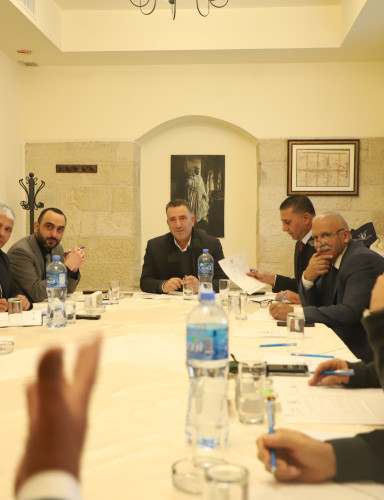
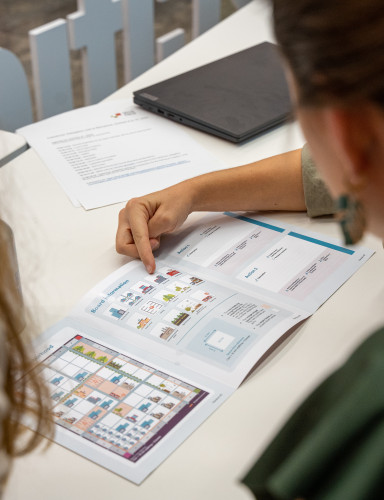
As a practical reflection of the areas of focus of District 11: Cities of Palestine, the initiative’s activities began with two specialized technical exchange rounds in Amman, bringing together 24 representatives from 24 Palestinian LGUs and more than 30 participants from Catalonia, representing several Catalan municipalities, universities, and institutions. The first round focuses on “Urban Resilience, Urban Planning and Water Management,” while the second addresses “Local Socio-Economic Development”. The two rounds provide a space for exchanging expertise and knowledge, discussing challenges and practical solutions, and exploring opportunities for cooperation between Palestinian LGUs and Catalan municipalities and institutions, contributing to capacity building and the development of practical initiatives and projects.