
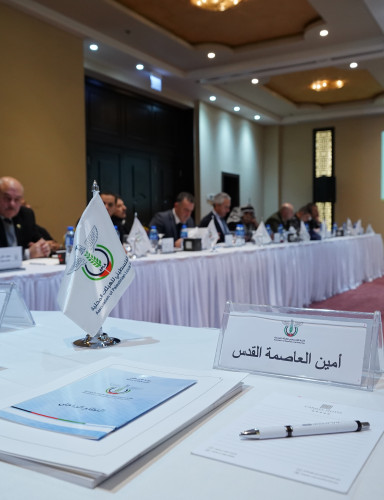
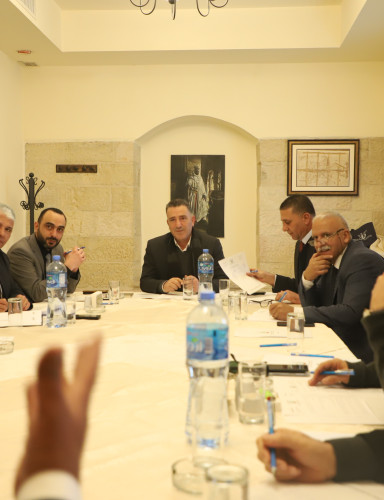



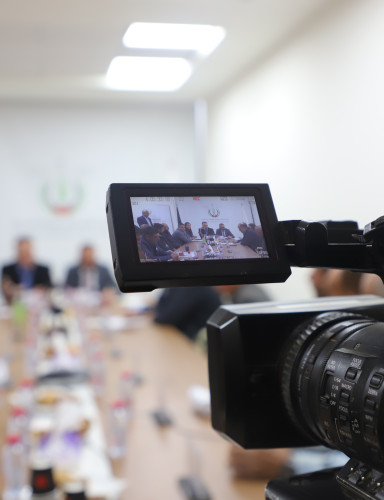



Policies and Planning Manager at the Association of Palestinian Local Authorities (APLA), Eng. Ohood Enaia, emphasized that Local Government Units (LGUs) are key partners in the development process, with a role that extends beyond service delivery to contributing to the identification of development priorities, shaping local policies, and achieving the Sustainable Development Goals (SDGs). This came during her participation in a virtual dialogue session organized by the Arab Urban Forum in cooperation with the United Nations Human Settlements Programme (UN-Habitat), to discuss efforts to implement the 2030 Agenda for Sustainable Development at the local level and exchange Arab experiences in SDG localization.
Eng. Enaia highlighted the specificities of the Palestinian context and the political, spatial, and institutional challenges it presents, which affect pathways towards sustainable development. She stressed that localizing the SDGs in Palestine requires an approach that responds to these specificities. Such an approach should go beyond aligning the global goals with local plans to incorporate the concepts of resilience, adaptability, spatial justice, and human rights protection. It should also strengthen the capacity of LGUs to ensure service continuity, respond to crises, address recovery needs, and support the reconstruction of affected cities, thereby safeguarding local communities' right to development and strengthening their ability to set their priorities and shape their future.
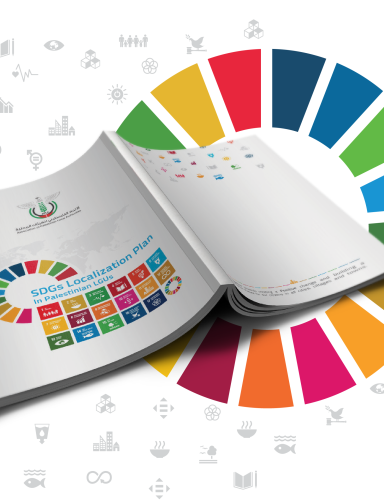
Alongside the Palestinian model, the session discussed the experiences of Jordan, Saudi Arabia, and Egypt in implementing the 2030 Agenda for Sustainable Development (2015–2030) at the national, regional, and local levels. It also highlighted APLA's experience in developing a plan for SDG localization, improving mechanisms for collecting local indicators and enhancing their quality, as well as showcasing key local experiences and practices in this field.
In another session, participants discussed priorities for the remaining four years of the 2030 Agenda, as well as visions and recommendations for the period beyond 2030. Discussions emphasized the importance of assessing progress and drawing lessons learned, enhancing implementation effectiveness, and relying on data in planning and decision-making. They also highlighted the need to expand decentralized cooperation and Arab regional collaboration, particularly in addressing shared challenges related to water, climate adaptation, and land management, while ensuring sustainable financing for economic and social development and well-being, in ways that take into account the specificities and needs of each country.
This participation comes as part of APLA's ongoing efforts to localize the SDGs and strengthen their integration into the work of Palestinian LGUs, while reinforcing their role as active partners in achieving development. It also reflects APLA's commitment to expanding its presence and engagement in Arab and international platforms and networks concerned with sustainable development and local governance, in order to amplify the Palestinian vision and experience, exchange knowledge and expertise, build partnerships, and highlight the issues and priorities of Palestinian LGUs in regional and international development dialogues.


