

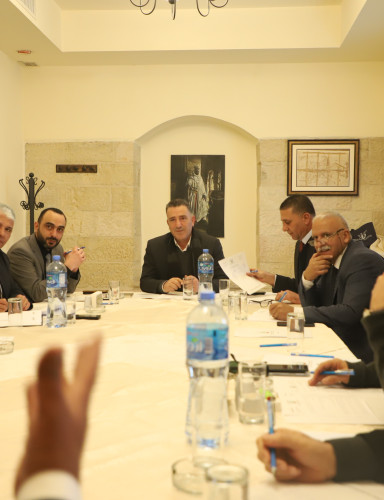



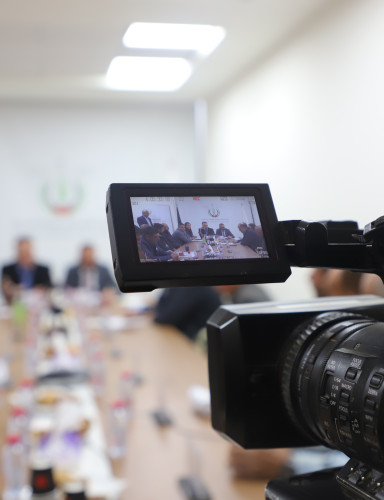



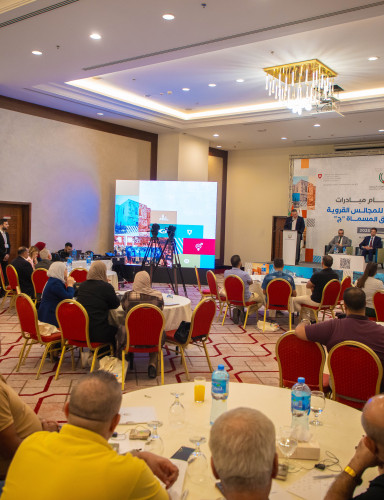



The Executive Director of the Association of Palestinian Local Authorities (APLA), Eng. Abdallah Anati, chaired a meeting with the Palestinian Electricity Transmission Company, attended by the Technical and Legal Support Unit Manager at APLA, Eng. Abdal Mo’men Afaneh, and APLA’s Advisors, Eng. Mousa Hadid and Dr. Tawfiq Al-Boudairi. The meeting was also attended by the Chairman of the Company’s Board of Directors, Dr. Imad Breik, the Company’s Director General, Eng. Nash’at Abu Bakr, the Director General of Guidance and Oversight at the Ministry of Local Government, Mr. Jihad Mashaqi, and representatives of the Energy and Natural Resources Authority. The meeting aimed to discuss proposed arrangements for managing electricity services and connection points, and defining the roles and responsibilities of the relevant stakeholders.
Eng. Anati reaffirmed APLA’s openness to dialogue on the regulatory framework governing electricity connection points, emphasizing the central and influential role of LGUs in electricity distribution and regulating service provision within their jurisdictions, in accordance with applicable legislation and citizens’ aspirations. He stressed the need for adequate assessment and diagnosis before introducing any changes to existing powers or roles, and for developing a participatory conceptual framework based on community participation and consensus among the concerned stakeholders, with any transition to a new phase of service management taking place gradually. He also highlighted the importance of establishing direct dialogue between the Company and LGUs before introducing mechanisms governing their relationship, as well as strengthening the Company’s efforts to disseminate knowledge and raise awareness of the proposed arrangements.
In this context, the financial and operational challenges facing LGUs were also highlighted, particularly declining revenues, low collection rates, and the difficulties of improving revenue collection and enforcing laws, especially amid the declining resources available to citizens. Despite these challenges, LGUs continue to fulfill their responsibilities in ensuring citizens’ access to essential services and meeting their needs, in addition to providing continuous daily services to national and governmental institutions operating within their jurisdictions.
For its part, the Palestinian Electricity Transmission Company clarified that its relationship with LGUs is based on partnership and integration, recognizing LGUs as key partners in electricity sector management. The Company stressed that their rights would not be compromised, while reaffirming its commitment to regulating the sector and improving operational management efficiency.
The parties agreed to continue systematic dialogue and consultation and work towards developing a clear and mutually agreed regulatory framework for electricity service management. The framework will define roles and responsibilities, strengthen the partnership between the Company and LGUs, safeguard LGUs’ rights and their role in service provision, enhance the efficiency of sector management, and serve the public interest.


