








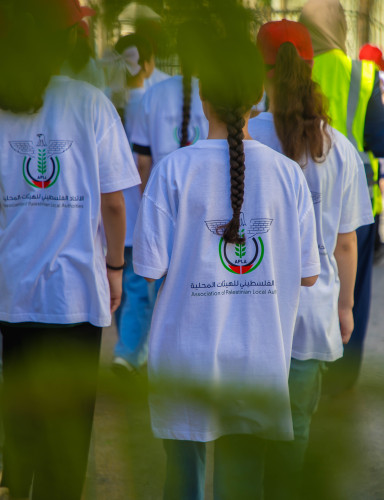



On the third day of the holy month of Ramadan, the town of Anabta launched the “Hilal Al-Khair” initiative as a community-based model that promotes solidarity and local support. The initiative was implemented under the Community Participation Plans Programme led by the Association of Palestinian Local Authorities (APLA), in integration with the project “Enhancing Local Governance through Policy Frameworks and Community Participation,” funded by the United Nations Development Programme (UNDP) – Transparency, Evidence and Accountability (TEA) Programme. The TEA programme is a UNDP-supported governance programme focused on transparency and accountability.
The initiative reflects APLA’s approach to institutionalizing community participation as a practical working method within local authorities—through interventions built on consultation with the community and implemented in partnership with local institutions. This approach strengthens transparency and accountability while generating direct social and economic impact that responds to citizens’ priorities and everyday needs.
The initiative featured the launch of “Hilal Al-Khair” as a community symbol carrying the message of solidarity during the holy month, alongside lanterns designated for decorating the crescent after being purchased by participants, with proceeds allocated to support Eid clothing for vulnerable families. The initiative also included a charity bazaar bringing together more than 20 small and women-led businesses, contributing to the marketing of local products and supporting the resilience and continuity of community-based enterprises.
In addition, the initiative included organized activities for children and a family-oriented Ramadan atmosphere, along with competitions, prizes for attendees, and instant photo documentation of family moments—further reinforcing the initiative’s interactive character and its role as an inclusive community platform that brings together social and economic dimensions.
This model highlights the importance of moving community participation from a conceptual framework into applied local practice—strengthening trust between local authorities and communities, supporting participatory local governance pathways, and reaffirming the role of local initiatives in delivering responses that are more connected to people and more grounded in local realities.