







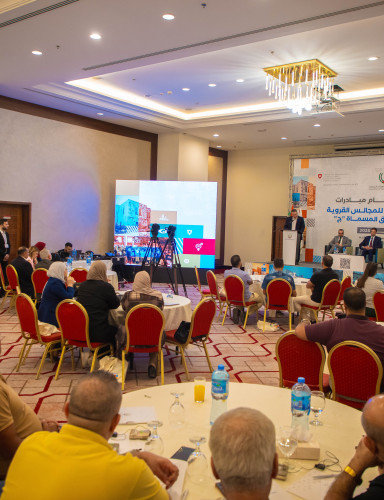


In the context of its dedicated efforts to promote the visibility of Palestinian local government units (LGUs) as key partners in formulating and implementing the 2030 Agenda for Sustainable Development, the Association of Palestinian Local Authorities (APLA) held a virtual seminar on Voluntary Local Reviews: From Documentation to Implementation. The seminar was organized in partnership with the Marmara Municipalities Union (MMU) and the SDG Cities Global Initiative, as part of the Marmara Urban Forum (MARUF25).
With the participation of more than 80 professionals from diverse backgrounds, the seminar served as an international platform for knowledge exchange between representatives of Palestinian local government units (LGUs) and experts from Turkey and Serbia. It sought to highlight the strategic value of Voluntary Local Reviews (VLRs) as tools that empower municipalities to articulate their development vision and engage directly with the United Nations agendas from a position of agency, rather than dependency.
The seminar was inaugurated by Dr. Ahmed Jaber, APLA SDG Localization Project Coordinator, who delivered a comprehensive intervention outlining APLA’s leadership in steering the SDG localization process at the Palestinian local level. In his presentation, Jaber emphasized the institutional approach adopted by APLA to embed localization as an inclusive and participatory process. This includes integrating SDGs into local plans and policies, strengthening capacity-building, developing practical guidance tools, and launching digital platforms to enhance documentation and communication.
The session provided a review of several international experiences in preparing VLRs. Representing the Ramallah Municipality, Irene Saadeh, Head of the Sustainable Development and International Cooperation Unit, presented the city’s experience, explaining how the VLR helped organize institutional vision and promote integration between local planning and global frameworks. Semtin Inanc from the Istanbul Municipality Planning Agency and Mirjam Jakic from the Municipality of Fatih also shared their experiences, stressing the importance of citizen engagement and localization of indicators within urban programs. From Serbia, Associate Professor Milena Dinić Branković of the University of Niš presented the expression of Niš Municipality, emphasizing that meaningful VLRs can be produced even with limited resources, provided there is strong will and a participatory approach.
The seminar featured practical discussions on the main challenges facing LGUs in preparing VLRs, including limited data availability, overlapping institutional roles, and the need for skilled technical staff in planning and documentation. Contributions highlighted the important role of APLA in enabling municipalities to advance this process along the lines of a clear vision that integrates current and future interventions. The discussions further underlined the need for establishing a national pathway that responds to the local context while remaining consistent with the United Nations SDG framework.