






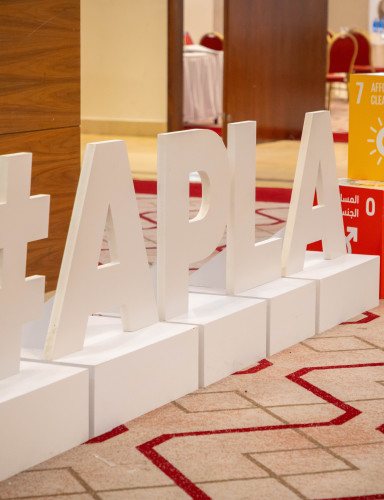


The Association of Palestinian Local Authorities (APLA) has signed funding agreements with four local government units as part of the first phase of the project "Empowering Local Government Units through Local Economic Development Grants." The initiative is supported by the French Consulate General in Jerusalem and is part of the ongoing institutional partnership between both sides, which aims to enable local government units to lead development-focused economic initiatives that deliver tangible community impact and improve socio-economic conditions in priority areas.
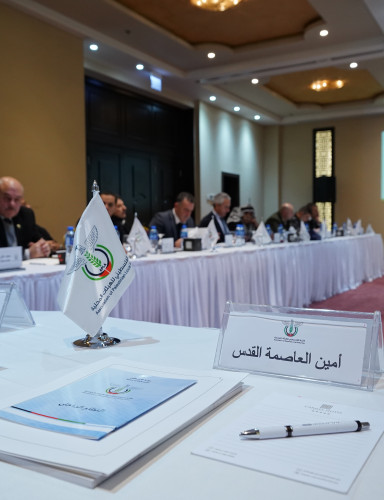
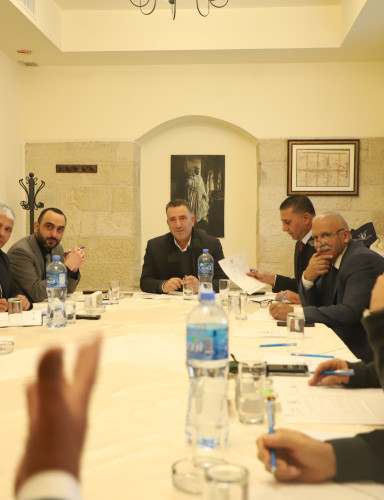
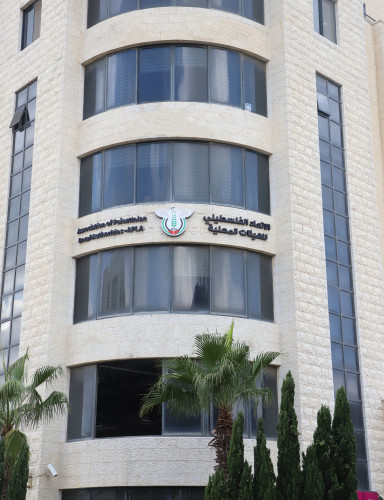
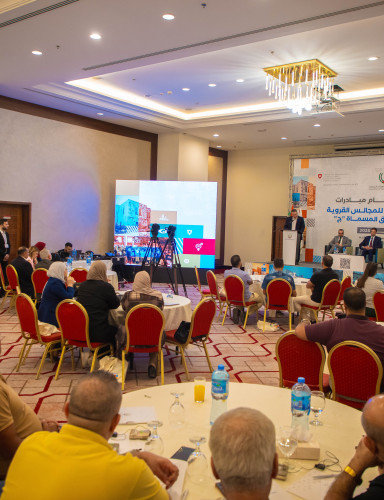
The signing ceremony took place at APLA’s headquarters in Ramallah, in the presence of APLA President Abdel Karim Al Zubaidi and the Consul General of France in Jerusalem, Nicolas Kassianides. The participating LGUs included: Beit Awwa Municipality, represented by Mayor Yousef Sweity; Sebastia Municipality, represented by Mayor Mohammad Azem; Qibya Village Council, represented by Deputy Mayor Ibrahim Khateeb; and Sekka–Tawas Village Council, represented by Mayor of Council Waleed Ihsheesh. The event was also attended by APLA Executive Director Eng. Abdallah Anati; Mr. Romaric Roignan, Middle-East and North Africa Director at the French Ministry for Europe and Foreign Affairs; as well as representatives from the French Consulate and APLA’s executive team.
In his remarks, APLA President Al Zubaidi stressed that this intervention comes at a critical time and reflects a strong commitment to supporting Palestinian LGUs not only in development terms, but also in affirming their role as a key pillar of social stability. He emphasized that local governments are no longer seen merely as service providers, but as central actors in the national framework—shouldering increasing responsibilities amid mounting challenges, maintaining community cohesion, and meeting urgent needs in the absence of political solutions.
Al Zubaidi also highlighted the importance of international partnerships that are grounded in a genuine understanding of the Palestinian context, calling for the expansion of decentralized cooperation with actors who recognize the essential role of local government and support its institutional resilience. He expressed APLA’s appreciation for France’s continued support of Palestinian rights, stating that “what Palestinians need today goes beyond symbolic solidarity—it requires serious and principled action from partner countries, foremost among them France, to pressure the occupying authorities to end their violations, uphold international law, and support political efforts to end the occupation and enable Palestinians to achieve their freedom and establish their independent state.”
For his part, French Consul General Mr. Nicolas Kassianides reaffirmed France’s firm commitment to supporting Palestinian LGUs, whether through the partnership with APLA as well as through the support of the French development agency to MDLF. Such support is not limited to development goals but carries a clear political message in recognizing the critical role that municipalities and village councils play in preserving societal cohesion and safeguarding Palestinian rights. He noted that France’s engagement in local governance stems from a broader vision that prioritizes the protection and continuity of Palestinian institutions in the absence of a just political solution.
Mr. Roignan, MENA Director at the French Ministry for Europe and Foreign Affairs, emphasized that this partnership aligns with France’s broader commitment to supporting the Palestinian people’s aspirations for statehood. He noted that strengthening local authorities and expanding decentralized cooperation are essential pillars in reinforcing Palestinian institutions, sustaining basic services, and furthering international recognition of Palestine as a functioning state with capable institutions—even amid ongoing challenges.
The mayors and representatives of the beneficiary municipalities and village councils expressed their gratitude to both APLA and the French Consulate for the support, noting that these agreements directly address pressing needs within their communities. They described the daily challenges facing their municipalities, including limited financial resources, stalled infrastructure development, and the need for development solutions that ensure service continuity and stimulate local economic activity. They emphasized the importance of this type of partnership—one that responds to realities on the ground and invests in the capacities of local governments.
This project constitutes the first phase of a broader program that is expected to include several other local authorities in the coming years. It is part of APLA’s wider strategic direction to enhance the ability of Palestinian local governments to implement integrated development projects, and to expand international partnerships based on decentralized cooperation—strengthening the role of local governments as essential actors in national development and key institutional and political players in navigating the exceptional challenges facing Palestine today.


