







The Association of Palestinian Local Authorities (APLA) and the Union of Union of Türkiye Municipalities (TBB) have formalized a strategic memorandum of understanding, to advance municipal collaboration and expand cooperation. The agreement focuses on knowledge exchange, joint development initiatives, improved local services, and strengthened social resilience. It also aims to enhance emergency response mechanisms, while unifying advocacy for the Palestinian cause, and elevate Palestinian municipalities in global forums, reinforcing bilateral ties and fostering a lasting partnership.
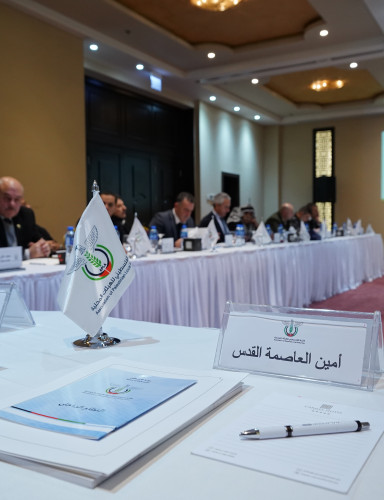
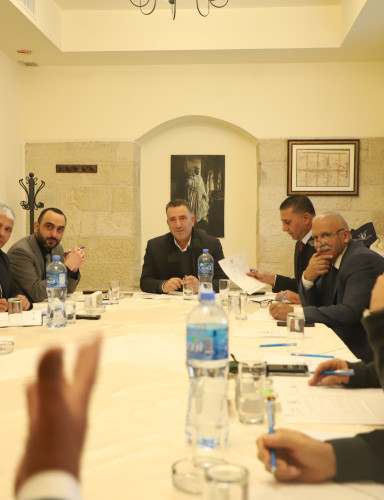
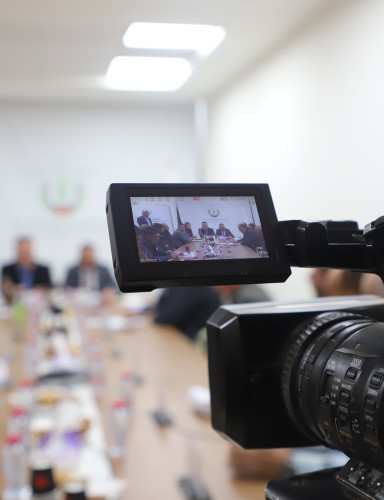
The signing ceremony brought together Abdul Karim Al-Zubaidi, President of APLA, and Ekrem İmamoğlu, President of the Union of Turkish Municipalities, alongside Suat Yıldız, Secretary-General of TBB, members of APLA’s executive committee, and APLA’s Executive Director, Eng. Abdullah Anati. During the event, the leaders underscored that this agreement transcends administrative collaboration, establishing a strategic alliance dedicated to upholding Palestinian rights, strengthening the resilience of Palestinian municipalities, and addressing escalating challenges.
In his speech at the signing ceremony, Abdul Karim Al-Zubaidi emphasized that this agreement marks a pivotal moment, as Palestine faces an escalating crisis, exacerbated by the widespread destruction of Gaza’s infrastructure and the war’s deepening impact on the West Bank—a deliberate campaign aimed at systematically erasing the Palestinian cause. He stressed that Israel is executing a calculated strategy to dismantle the refugee issue, erase Palestinian camps, and impose a new reality by forcibly displacing Palestinians, entrenching illegal settlements, and dismantling the very foundations of local governance.
Al-Zubaidi stressed that Palestinian municipalities are no longer merely administrative entities providing essential services; they have become the first line of defense for Palestinian land and identity. He explained that these municipalities have surpassed their traditional roles, assuming greater responsibilities in the absence of a just political solution, while also confronting severe challenges imposed by Israel’s blockade, economic strangulation, and systematic restrictions. He further asserted that engaging in international partnerships is no longer an option but a strategic necessity to amplify the Palestinian narrative on the global stage—an effort in which Turkey stands as a key ally.
The President of the Union of Türkiye Municipalities, Ekrem İmamoğlu, reaffirmed that this agreement embodies Turkey’s steadfast commitment to supporting Palestinian rights and bolstering the resilience of Palestinian municipalities amid escalating challenges. He emphasized that the Palestinian cause is not merely a regional concern but a central pillar in the pursuit of justice and stability. İmamoğlu reiterated Turkey’s unwavering stance in advocating for Palestinian rights and its dedication to empowering Palestinian LGUs, enhancing their institutional capacities to ensure they continue playing a pivotal role in safeguarding the land and preserving national identity.
In this context, İmamoğlu stressed that the challenges confronting Palestinian municipalities demand more than symbolic support—they require effective cooperation and tangible mechanisms that enable them to fulfill their essential role in serving their communities. He asserted that this agreement marks a significant milestone in strengthening the partnership between Palestinian and Turkish municipalities, fostering knowledge exchange, advancing sustainable solutions, and opening new channels for supporting development initiatives. Additionally, he underscored the critical importance of enhancing the institutional capacity of Palestinian LGUs to ensure their operational efficiency, reinforcing their role as key drivers of stability and resilience in the face of mounting pressures.
This agreement marks the beginning of a more profound and effective cooperation between the two unions, laying the foundation for developing mutual support mechanisms, fostering a shared vision for sustainable development, advancing knowledge exchange, amplifying advocacy efforts, and implementing joint projects that directly address the needs of local communities.


