
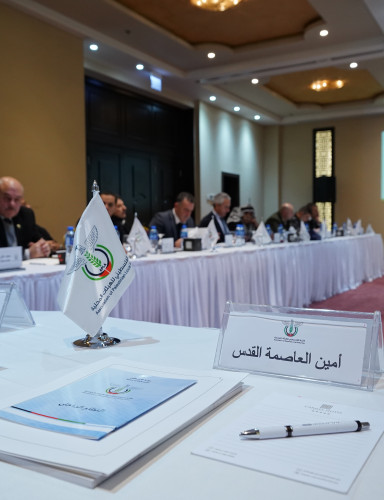

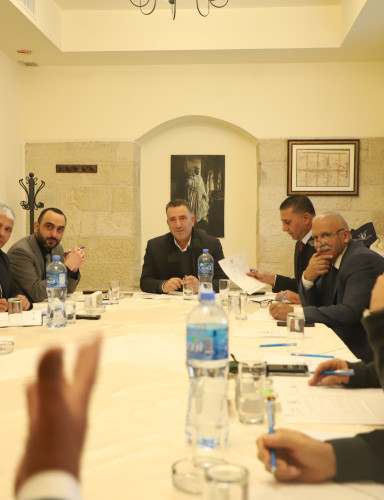



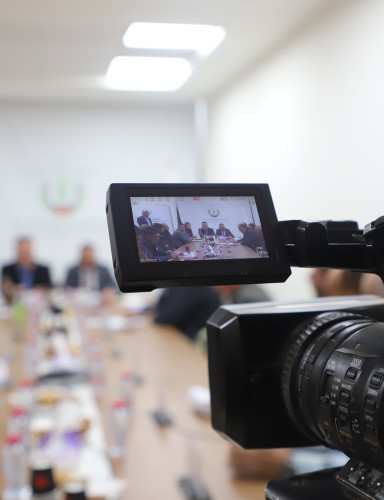

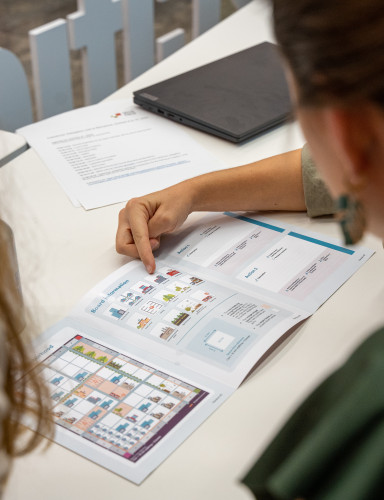
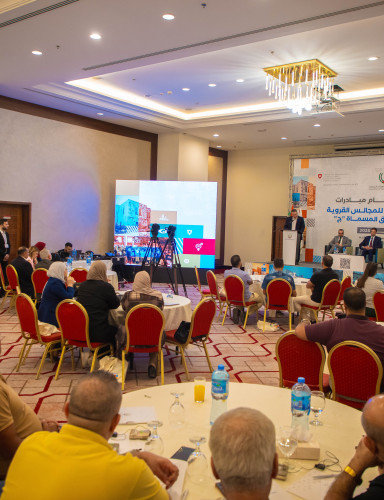



The Association of Palestinian Local Authorities (APLA) conducted a series of consultative workshops to develop the self-audit tool concerning people with disabilities, with the aim of using it as a planning, control and evaluation tool in local authorities. The series was conducted over three days with the attendance of 79 employees from local authorities under the project "Promoting the Rights of People with Disabilities in Palestine", and is implemented in partnerships with EducAid, funded by AICS.
Activities Coordinator at APLA, Shurouq Rabee' clarified that the project of promoting the rights of people with disabilities in Palestine aims to empower, integrate and guarantee the inclusion of people with disabilities and their families into the Palestinian society and its different components. She also expressed that APLA's role is focused around providing support and aid to local authorities in relevant issues through identifying the classification of disability, its types and means of addressing it through a series of activities, which will be implemented over the course of two years, 2021-2022.
Meanwhile, Project Director from EducAid, Illaria Belnesti introduced the partner local organizations in implementing the project, emphasizing that EducAid seeks through this project to enhance the capacities of local authorities and civil society in the issues of empowerment and integration of People with Disabilities. In addition, the project will contribute to promoting the rights of people with disabilities through increasing their social and economic empowerment.
Coordinator Federico Ciani, and researcher Chiara Chimiri representing ARCO – Italian Company who prepared the proposed self-audit tool, both gave an introduction about the company, its departments and locations around the world, an introduction on the project, its goals, basic concepts, and the most important considerations related to the empowerment and integration of people with disabilities. In addition, they provided a detailed explanation on the tool being developed and shared with the local authorities in order to harmonize it to their needs and requirements.
Participants reviewed all their comments on the proposes self-audit tool, and it was agreed to give local authorities additional period of time to submit their comments and remarks in details and in writing, in order to be adopted in the final stage of preparing the tool. Moreover, it was agreed to conduct a comprehensive workshop after taking the recommendations and suggestions for the final review of the tool before arriving to the final draft and circulating it to the local authorities.


